RSS
 

Archive for the ‘Google Reader’ Category

Google Just Lost a Potential Ally in its Legal Tussle with Oracle

12 Oct


The battle between Oracle and Google over Android’s use of Java just got a lot more interesting. That’s because IBM has announced that it will be collaborating with Oracle to work on the OpenJDK project.

This means that IBM will no longer be part of the Apache Software Foundation’s Project Harmony, the project that provides Android with the components it needs to run Java code. With IBM leaving the project, Harmony is basically dead in the water.

Although Android wasn’t mentioned in the announcement, this is all interrelated to the Oracle lawsuit. Google responded to the lawsuit last week, claiming that Oracle, which got Java out of its purchase of Sun Microsystems, was acting in bad faith.

For the non-Java savvy out there, here’s an abbreviated rundown of how and why all of this stuff matters:

Apache Harmony is an open source implementation of Java. The goal in creating the project was to unite all of the various free software Java implementations together under one banner.

The project had a lot of early support, the only problem was that Sun (and then Oracle) never offered the project with a Technology Compatibility Kit (TCK). The TCK is needed to prove that Harmony is compatible with the Java specification and can be seen as a certified Java independent version of Java. When Sun first open sourced aspects of Java in 2007, it said it would provide the Apache Foundation with the necessary TCK for certification.

Sun never made good on those assurances and when Oracle took over Sun, the new company wasn’t interested in sharing the TCKs, instead wanting to focus all of its efforts on the officially sanctioned open source Java implementation, OpenJDK.

IBM’s Bob Sutor discussed the decision on his blog, writing:

“We think this is the pragmatic choice. It became clear to us that first Sun and then Oracle were never planning to make the important test and certification tests for Java, the Java SE TCK, available to Apache. We disagreed with this choice, but it was not ours to make. So rather than continue to drive Harmony as an unofficial and uncertified Java effort, we decided to shift direction and put our efforts into OpenJDK. Our involvement will not be casual as we plan to hold leadership positions and, with the other members of the community, fully expect to have a strong say in how the project is managed and in which technical direction it goes.”

This is a big blow to the Harmony project and by extension, to the libraries and classes that Android implements from Harmony in Android. Without big backing like IBM behind the project, it’s not likely to survive.

For now, the Harmony implementation of Java is fine. The problem will be when future versions of Java are released and Harmony can’t keep up in terms of features.

In Java, staying compatible is key. Interestingly, InfoWorld notes that Google has more developers working on OpenJDK than Oracle. So why choose Harmony for Android?

We think it’s because Google wanted to do an end-run around Sun’s licensing requirements. In essence, getting to take advantage of Java SE on mobile devices (something that Sun explicitly forbade without a license), but not having to pay for it.

Long before Sun’s sale to Oracle, others pointed out the potential licensing and IP quagmire that Google was entering with Android. The reality was, Sun didn’t have the power, the funds or the industry clout to really do anything about it.

Oracle does. In fact, Oracle’s clout and power is underscored by IBM’s decision to join up. IBM may be making its decisions for pragmatic reasons, but in the decision shows that IBM is not willing to side with Google in this elongated fight.

At this point, Google’s only real recourse is to sensibly settle and pay Oracle, or countersue and drag the fight out even longer. By fighting back, Google risks alienating its Java-base of developers.

While we question how important having a strong base of Java developers really is to Android’s success in the long term, it doesn’t mean it’s worth risking the future developments of the platform on a legal gamble.

Oracle is out for blood and IBM just provided the syringe.


Reviews: Android, Google

More About: android, apache foundation, Google, harmony, IBM, java, lawsuits, legal, oracle

For more Tech coverage:


Sure-footed bighorn sheep take a stroll on the face of the Buffalo Bill Dam

12 Oct

Image002

The dam is located

Image003

on the Shoshone River

Image001

in Cody, Wyoming.

[via Joe Peach]

................................

Correction and amplification here.


Internet Advertising Hits New Revenue Record

12 Oct


Online advertising is thriving in the U.S., according to figures released in the latest IAB Internet Advertising Revenue Report.

Businesses and individuals spent approximately $12.1 billion on online advertising in the first six months of 2010, up 11.3% from the from the first half of 2009 and 13.9% from the second quarter of 2009. In fact, this was both the highest first-half and second-quarter revenue ever recorded.

Search advertising continued to monopolize the greater share of online ad dollars, having attracted more than $5.7 billion in spending between January and June this year — a year-over-year increase of 11.6%. Display advertising, which includes banner ads, digital video, rich media and sponsorships, garnered more than $4.4 billion in the first half of 2010, a 16% increase over the same period in 2009.

Digital video recorded the greatest growth of all. More was spent in video advertising from January to June than in any other half-year period before, an increase of 31% from the first half of 2009.

IAB’s SVP of Industry Services Sherill Mane cited growing online advertising budgets among consumer packaged goods and pharmaceutical companies for the growth.

“While the recession clearly affected short term growth in 2009, with double digit growth in both search and display during the first six month of 2010, the long term prospects continue to be strong,” added David Silverman, PwC Assurance partner.

Image courtesy of iStockphoto, tforgo


Reviews: iStockphoto

More About: advertising, MARKETING, online advertising

For more Business coverage:


lostworldsfairs.com/moon/

12 Oct


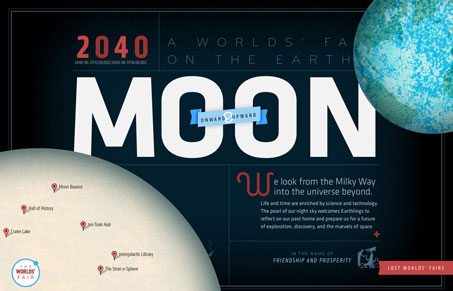
This is the “Moon” website or page from the Lost World’s Fairs website project designed by Jason Santa Maria.

I love this design for “Moon”, the visual depth is really nice. I also love the movement as you scale your browser window down and then back up. The little illustrations are sweet too. It’s really hard to believe this is done with web fonts.


Cosmic strings are super-massive, ultra-thin cracks in the universe [Mad Astrophysics]

12 Oct
Cosmic strings are theoretical fault lines in the universe, defective links between different regions of space created in the moments after the Big Bang. And they might be theoretical no longer - distant quasars show the fingerprints of these strings. More »


Chart Of The Day

12 Oct

CanadiansUSHealthcare

Aaron Carroll explodes a talking point:

I’m not denying that some people with means might come to the United States for care.  If I needed a heart/lung transplant, there’s no place I’d rather be.  But for the vast, vast majority of people, that’s not happening.  You shouldn’t use the anecdote to describe things at a population level.  This study showed you three different methodologies, all with solid rationales behind them, all showing that this meme is mostly apocryphal.


Email this Article Add to digg Add to Reddit Add to Twitter Add to del.icio.us Add to StumbleUpon Add to Facebook


Facebook, Twitter and The Two Branches of Social Media [OP-ED]

11 Oct

Two Directions Sign

The Social Analyst is a column by Mashable Co-Editor Ben Parr, where he digs into social media trends and how they are affecting companies in the space.

There’s no disputing that Facebook is the poster child for social networking. It is the platform for building social connections online and keeping up to date with what’s happening in your social circle. It is one of the two most important platforms in social media.

The other one is Twitter. However, if you try to describe Twitter as a “social network” to anyone who works at the company, they’ll quickly correct you. Internally and externally, Twitter describes itself as an “information network.”

What exactly is the difference? And is there one?

People have used the terms “social media” and “social network” almost interchangeably over the years. It’s inaccurate to say that they’re the same thing, though. In fact, I argue that social networking is a branch of social media, and can itself be further broken down into two distinct branches — the social network and the information network.

It’s with this distinction that I attempt to explain the relationship between Facebook and Twitter, and why I believe they are not destined for a clash of the titans. Instead, they represent two different sides of the same coin.


The Difference Between Facebook and Twitter


It’s easy to see why most people think Facebook and Twitter are essentially the same. The core of their experiences focuses around profiles, relationships and a newsfeed. But if you dig a bit deeper, you realize that people use each platform for different purposes.

On Facebook, you’re supposed to connect with close friends. Becoming friends with someone means he or she gets to see your content, but you also get to see his or her content in return. On Twitter, that’s not the case: you choose what information you want to receive, and you have no obligation to follow anybody. Facebook emphasizes profiles and people, while Twitter emphasizes the actual content (in its case, tweets).

The result is that the stream of information is simply different on both services. You’re more likely to talk about personal issues, happy birthday wishes, gossip about a changed Facebook relationship status, and postings about parties on your Facebook News Feed. On Twitter, you’re more likely to find links and news, and you’re more likely to follow brands, news sources and other entities outside of your social graph. In fact, Twitter tells me that one out of every four tweets includes a link to some form of content.

There’s also interesting data from a team of Korean researchers suggesting that information sharing is fundamentally different on Twitter when compared to social networks. Their conclusion was that Twitter has “characteristics of news media” rather than characteristics of a social network.

In other words, Facebook and Twitter are different once you look past their social media roots. Now it’s time to define the difference between a social network and an information network.


Social Networks vs. Information Networks


This may seem obvious, but social networks are about your social networks. Specifically, the focus is on your friends, colleagues and personal connections. They are about sharing personal or professional experiences together. They are about keeping in touch with friends rather than discovering news or content. Facebook, LinkedIn, Bebo, MySpace, hi5 and Orkut clearly fall under the “social networking” branch of social media.

The concept of an information network is a more recent phenomenon. Information networks are about leveraging different networks to distribute and consume information. While they may utilize an array social media tools in order to find, curate or deliver content, they focus less on what’s happening in your social graph and more on information you want. Twitter may be the best example of an information network, but YouTube (video), Flickr (photos) and Digg (news) are information networks as well.

Pretty much every social media platform has aspects of both types of networks, but they tend to fall into one category or the other. I contend that Foursquare is a social network because it utilizes Facebook’s friend model instead of Twitter’s follow model, but you might have a different opinion.

In fact, that may be the biggest differentiating point between social networks and information networks. For the most part, content on Flickr, YouTube or Twitter is public, while content on MySpace, Facebook or Bebo is private. A big reason for that is that the former services utilize the follow or subscription model, while the latter ones utilize the friend model.


Conclusion


I consider this article to be the start, not the end, of an exploration of how we define social media and the services that comprise it. We tend to group Facebook, Twitter and an array of other web tools into one giant pile, when in fact they’re vastly different tools with vastly different applications and uses.

Facebook, with its mutual friend connections and college-exclusive beginnings, is better suited for keeping in touch with friends. For most people, it is indeed a network of your social graph, all in one place. Twitter, on the other hand, is all about the stream of information coming from people and organizations all across the world. That’s why there’s room for both: they simply provide different functions.

If we are to take social media further and further change the world with social technologies, we need to better understand how we use these technologies. The first step is understanding how we as a society currently utilize social networks and information networks in our daily lives. There are many intricacies that underlie social and information networks, most of which we don’t yet understand.


More Social Media Resources from Mashable:


- 5 Fun and Safe Social Networks for Children
- New Facebook Groups Designed to Change the Way You Use Facebook [VIDEO]
- “SNL” Spoofs Facebook’s Mark Zuckerberg [VIDEO]
- HOW TO: Customize Your Background for the New Twitter
- Top 10 Twitter Tips for Bands, By Bands

Image courtesy of iStockphoto, ryasick


Reviews: Bebo, Digg, Facebook, Flickr, Foursquare, Hi5, LinkedIn, MySpace, Orkut, Twitter, YouTube, iStockphoto

More About: Column, facebook, Information Network, Information Networking, social media, social network, social networking, The Social Analyst, twitter

For more Social Media coverage:


New record size for a genome goes to rare plant

11 Oct

A rare plant called Paris japonica has a genome 50 times longer than that of humans, making it the longest genome ever recorded. The Royal Botanic Gardens, Kew , announced the discovery last week, and details appear in the September 2010 issue of the Botanical Journal of the Linnean Society .

The Paris japonica genome weighs in at 152.23 picograms (trillionths of a gram), 15 percent larger than the previously biggest known genome, that of related herb, a hybrid trillium known as Trillium × hagae . "It's so large that when stretched out it would be taller than Big Ben," said Ilia Leitch, a research scientist at Kew's Jodrell Laboratory , in a prepared statement. Human DNA would only stretch out to about two meters. The plant has 150 billion base pairs, compared with humans' 3 billion.

[More]


Graffiti Artist Banksy Directs Opening Sequence of “The Simpsons” [VIDEO]

11 Oct

Update (4:32 p.m. ET): The Banksy intro has been pulled from YouTube. We have replaced it with a clip from Hulu, which is viewable to U.S. users only.

British graffiti artist and political activist Banksy was invited to direct the opening sequence of the latest episode of The Simpsons. The result is one of the funniest — but at the same time the most depressing — intros to the popular cartoon series we’ve seen.

We won’t reveal what happens in the intro, which is spreading like wildfire across the web; you can see it for yourself in the video embedded below. Know this, though: All those Bart Simpson dolls you see at every corner, well, they’re made of broken hearts and shattered dreams.

More About: Banksy, Bart Simpson, the simpsons

For more Entertainment coverage: