RSS
 

Archive for the ‘Google Reader’ Category

Chamomile Tea Party Posters

05 Jul

Boing Boing reader Jeff says, "I'm so sick of the rancor and party politics in Washington, so I created a series of posters under the moniker of the 'Chamomile Tea Party,' advocating for putting the country first and parties last. The posters are based on WWII-era propaganda posters."


Prince declares the internet “over”

05 Jul


In an rare interview granted to The Daily Mirror published earlier today, Prince declares:

The internet’s completely over. I don’t see why I should give my new music to iTunes or anyone else. They won’t pay me an advance for it and then they get angry when they can’t get it. The internet’s like MTV. At one time MTV was hip and suddenly it became outdated. Anyway, all these computers and digital gadgets are no good. They just fill your head with numbers and that can’t be good for you.

I guess we can’t blame the man for this off-hand nullification of everything that is modern and good, and which in all likelihood have made his career longer and more lucrative. Like other divas led into the intellectual oubliette of narcissism, he has no concept of the world, because his world is himself.

As for his music, there is no doubt it is popular. His new album, 20TEN, is the occasion for the interview, and the occasion for the quote above was discussion of his releasing his music exclusively via the Mirror. His “ongoing battles against internet abuses,” as the interviewer politely puts it, take the usual form of having unofficial YouTube videos taken down and not distributing his music via digital means. Very effective, I’m sure.

I won’t comment further on this (admittedly talented) man’s mystifying backwardness. I’ll only say that deliberately alienating his existing fan base and preventing a new generation from accessing his music natively, as it were, are tactics certain to be detrimental to his legacy — if not his immediate record sales.


Reading E-Books Takes Longer Than Reading Paper Books

05 Jul
Hugh Pickens writes "PC World reports on a study showing that reading from a printed book — versus an e-book on any of the three tested devices, an iPad, Kindle 2, and PC — was a faster experience to a significant degree. Readers measured on the iPad reported reading speeds, on average, of 6.2 percent slower than their print-reading counterparts, while readers on the Kindle 2 clocked in at 10.7 percent slower. Jacob Nielsen had each participant read a short story by Ernest Hemingway. Each participant was timed, then quizzed to determine their comprehension and understanding of what they just read. Nielsen also surveyed users' satisfaction levels after operating each device (or page). For user satisfaction, the iPad, Kindle, and book all scored relatively equally at 5.8, 5.7, and 5.6 on a one-to-seven ranking scale (seven representing the best experience). The PC, however, did not fare so well, getting a usability score of 3.6."

Read more of this story at Slashdot.


Reading E-Books Takes Longer Than Reading Paper Books

05 Jul
Hugh Pickens writes "PC World reports on a study showing that reading from a printed book — versus an e-book on any of the three tested devices, an iPad, Kindle 2, and PC — was a faster experience to a significant degree. Readers measured on the iPad reported reading speeds, on average, of 6.2 percent slower than their print-reading counterparts, while readers on the Kindle 2 clocked in at 10.7 percent slower. Jacob Nielsen had each participant read a short story by Ernest Hemingway. Each participant was timed, then quizzed to determine their comprehension and understanding of what they just read. Nielsen also surveyed users' satisfaction levels after operating each device (or page). For user satisfaction, the iPad, Kindle, and book all scored relatively equally at 5.8, 5.7, and 5.6 on a one-to-seven ranking scale (seven representing the best experience). The PC, however, did not fare so well, getting a usability score of 3.6."

Read more of this story at Slashdot.


Price shocks waiting as US abandons helium business

05 Jul

Robert Richardson got a Nobel Prize for creating the first superfluid, a Bose-Einstein condensate comprised of chilled helium. But he started his talk at the Lindau Nobel Laureates Meeting by announcing that he'd be focusing purely on science policy—policy related to his work, given that the policy in question is the one that governs much of the world's stockpile of helium.

Because of how the US is privatizing its stock of the gas, prices are artificially low, which is encouraging a pattern of consumption that may leave us without significant supplies of the gas midway through the century.

Inert but interesting

Why is that significant? Richardson started by describing helium's more interesting properties, which are key to its commercial use. These include its chemistry—his slide led with the text, "helium has no chemistry; it is a mere placeholder between hydrogen and lithium on the periodic table." Being completely inert may seem rather dull, but for industries that work with highly reactive materials, this absence of chemistry can be essential.

Read the rest of this article...

Read the comments on this post


Kamchatka-Karymskaya Volcano,,,Russia

05 Jul

"Kamchatka-Karymskaya Volcano,,,Russia"


Police Stop Journalists From Photographing Metrorail System

05 Jul
schwit1 writes with this excerpt from Reason.com: "Carlos Miller, who runs the Photography Is Not a Crime blog, and veteran photojournalist Stretch Leford decided to test the photography rules in Miami-Dade's metrorail system. Before embarking on their test, they obtained written assurance from Metro Safety and Security Chief Eric Muntan that there's no law against non-commercial photography on the system. The two didn't make it past the first station before they were stopped. Employees of 50 State Security, the private firm contracted to provide the metro's security, stopped the pair first. They then called in local police. The private firm and the police then threatened the two with arrest, demanded their identification (to check them against a terrorist watch list), demanded multiple times that they stop filming, and eventually 'banned' Miller and Ledford from the metro system 'for life' (though it's doubtful they had the authority to do so)."

Read more of this story at Slashdot.


Police Stop Journalists From Photographing Metrorail System

05 Jul
schwit1 writes with this excerpt from Reason.com: "Carlos Miller, who runs the Photography Is Not a Crime blog, and veteran photojournalist Stretch Leford decided to test the photography rules in Miami-Dade's metrorail system. Before embarking on their test, they obtained written assurance from Metro Safety and Security Chief Eric Muntan that there's no law against non-commercial photography on the system. The two didn't make it past the first station before they were stopped. Employees of 50 State Security, the private firm contracted to provide the metro's security, stopped the pair first. They then called in local police. The private firm and the police then threatened the two with arrest, demanded their identification (to check them against a terrorist watch list), demanded multiple times that they stop filming, and eventually 'banned' Miller and Ledford from the metro system 'for life' (though it's doubtful they had the authority to do so)."

Read more of this story at Slashdot.


The hidden, invisible, and private web

05 Jul

Everyone knows that Google and the other search engines between them crawl, spider, and slurp up the whole internet, right? Wrong! The millions of websites that are obviously available on the internet are readily searchable, Google Bing, Yahoo, and their ilk have seen to that, we can usually find documents, pages, digital images, videos, music, and public scientific datasets at low cost, rapidly and accurately. But, that’s just the surface, there are countless resources that are simply inaccessible to search engine bots, not least emails, FTP sites, IRC, and IM.

Then there is the Invisible Web, something about which I first wrote way back in the mid-1990s. The Invisible Web is the term used to describe the contents of publicly accessible databases that are revealed on a per-user basis on demand and mostly off-limits to search engines, with a few exceptions.

Definitely off-limits to all public search engines and all members of the public for that matter are private databases, corporate and institutional sites that are locked behind firewalls, passwords, and protective scripts.

However, some owners of chunks of the private web might be amenable to letting trusted users access their private parts, it’s just that the users don’t know the private data is there and the owners don’t know who to trust. Now, Peter Mork and colleagues at the Mitre Corporation in McLean, Virginia, have come up with a way to bring the two parties together. They have developed a way to publicize the existence of private web resources that draws on various summarization strategies and demonstrates a way to create a database summary, which they call a digest, that then becomes part of the announcement. They have then looked at the trade-off between the data owners’ desires to minimize disclosure of sensitive information and the searchers’ desires to maximize the accuracy of their searches.

As an example of the kind of private web Mork and colleagues are alluding to. Imagine a specialist in the spread of flu during an epidemic hoping to trawl medical records to figure out how many people might become infected, these are strictly off-limits to the general public and to most researchers for that matter? Or, what about an economist hoping to spot trends in stock market dealings to help warn of another credit crunch well before it happens? Again private deals, are…private, so they will have no access to that information. On the other, anonymized data might be available to help the specialist find data sources relevant to current research. Similarly, summarized data can point the economist to data relevant to his inquiry. But, these data can only be utilized if they can be found.

Mork and colleagues’ digest approach allows data owners to publish less sensitive versions of their data so that searchers can determine with which data owners they should negotiate access. In this way, the private web maintains its privacy, while becoming a little more searchable, thereby allowing researchers to spend more time doing research and less time struggling to find data.

Research Blogging Icon Peter Mork, Ken Smith, Barbara Blaustein, Christopher Wolf, Ken Samuel, Keri Sarver, & Irina Vayndiner (2010). Facilitating discovery on the private web using dataset digests International Journal of Metadata, Semantics and Ontologies, 5 (3), 170-183

The hidden, invisible, and private web is a post from: Sciencebase Science Blog

Share/Bookmark


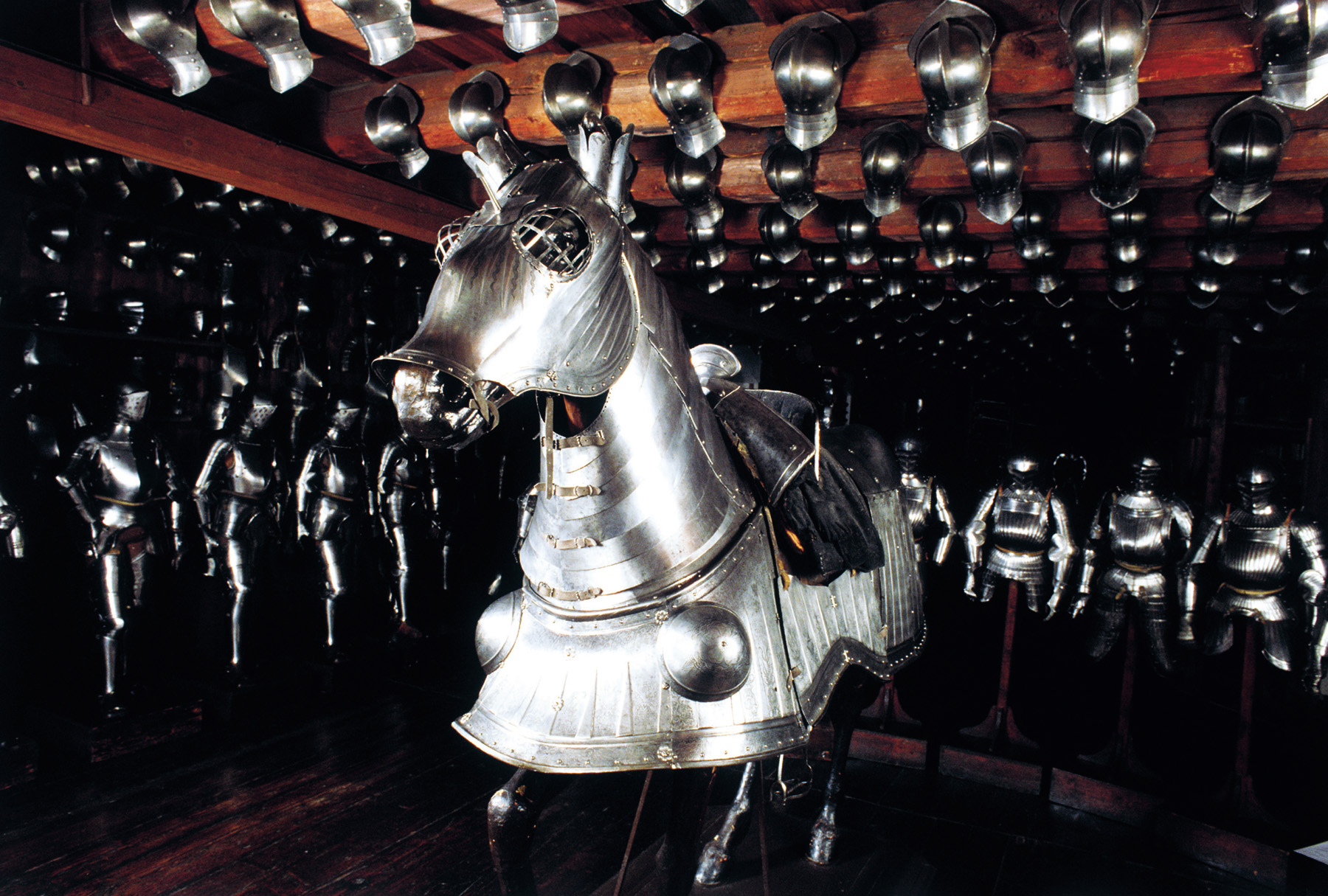
Zeughaus Museum: The Worlds Most Extensive Collection of Historical Weaponry

03 Jul

Home to close to 30,000 pieces of historical weaponry, the Zeughaus Museum in Graz Austria represents the area’s rich military heritage. The museum’s collection includes guns, swords, and armor, including this complete set of armor for a horse.

Link

From the Upcoming ueue, submitted by lannaxe96.