RSS
 

Archive for the ‘Google Reader’ Category

Why China Won’t Win in This Century

08 Jan

“The reason why China will never win hands-down in its current economic war with America is the same as why Japan didn’t succeed in the 1980s when all (Americans included) were expecting that its corporations and banks would eat America up. The reason is that both countries are good at copying ideas and technologies; neither is good at inventing new ones.” That argument is Keith Hudson’s post today on his blog.

Here’s the rest.

It’s their written language that’s the main part of their problem. It’s non-phonetic. It means that in order to acquire a basic vocabulary—of, say, 2,000 or 3,000 words (the content of their average newspapers)—- children have to learn uniquely-shaped characters (whole words) which have no, or very little, relationship with their utterance. A Chinese or Japanese child can learn to speak his language quite as readily as children do the world over, but learning how to read or write each individual word takes many years. And there’s only one way, unfortunately for children, and that’s by rote learning. And thousands of hours of rote learning over many years under the strict discipline of slave-masters in the schoolroom doesn’t do anything for the creativity of young minds—or for older minds for that matter because the basic mental skills are aptitudes are thoroughly laid down before puberty.

The Chinese and Japanese governments are well aware of the damage that rote learning is doing to them—and say so quite frequently. Although both countries can churn out ten of thousands of science and engineering graduates every year, there’s scarcely an independent mind among them. Independent ‘garage inventors’, as we have in the West, are as rare as hen’s teeth in China and Japan. For example, Japan has been industrialized for over a century—only a decade or two less than other Western countries—yet it has only won 15 Nobel prizes in the science subjects. Compare this figure with those of America (261), the UK (91) and Germany (88). China has only won 10! However, this comparison is unfair because China’s have only been won since it woke up in the 1970s. America’s number also needs to be modified because about a third of its prizes have been won by foreign-born scientists who became American citizens after migrating there.

It’s all Emperor Qin Shi Huang’s fault (yes, the same as is famed for his terracotta army). Once Qin had conquered several countries and unified China in 221BC, he standardized as many things as possible—from weights and measures and currency through to the written language. All the various scholars throughout his empire, speaking scores of different languages (some with and some without a written form) were forced—on pain of death—to produce a composite, but common, written language. And this could only be non-phonetic, of course. Even the mighty power of Emperor Qin couldn’t force millions of his subjects to learn a new common spoken language but he could certainly force his relatively few scholars to produce a new common written one. One popular penalty in those days was to cut someone through his midriff, mount him on a platter of hot tar and take him around the town, gesticulating and shouting before he expired.

And herein lies a paradox, because the industrial revolution in Europe would never have happened without starting from a basic stock of scores of innovations—such as canal locks, differential gears, sowing grain in rows and so forth—that had drifted in from China along the Great Silk Road over a period of centuries. However, this doesn’t signify that the Chinese had been more inventive than Europeans. But its common written language had meant that when one innovation—say a wheelbarrow (very important indeed for both China and Europe)—had been invented by a genius in one tucked-away corner of China, then the local mandarin could write and tell hundreds more all about this wonderful new device.

But what once had been an accelerator for both Chinese and European civilizations actually became a retardant for China when the Western Enlightenment and scientific revolution stirred into life in the 1600s and 1700s. The Chinese had no way of encapsulating these new ideas. A Chinese mandarin visiting Europe in, say, the 1700s or 1800s, and learning about the new exciting scientific ideas (if he’d learned Latin or another European language of course) had no way of disseminating them widely in China because there he had no method of writing them down in Chinese words that would have been instantly recognizable by fellow Chinese scholars or engineers. He could only convey the new ideas vaguely by speaking of them face-to-face when he returned home.

Thus Japan (which had inherited thousands of Chinese words) and China were left behind by the industrial revolution in England, Germany and America. They didn’t begin to catch up in earnest until the the 1870s (the Meiji Revolution) and the 1970s (the Deng Xiaoping Revolution) respectively. And this is still—largely—where they are today. Both the Chinese and Japanese governments are trying to phoneticize their written languages but only very slowly, such is the cultural conservatism of two thousands years to contend with.

What might be significant in China (though not yet happening in Japan), is that all their college and university entrants have to learn spoken and written English these days. All their top government officials speak English and most business and science faculties in their universities use English widely in their seminars. Also, thousands of their brightest young post-grad scientists go to America or England for research experience and qualifications. Indeed, once they are here for a few years they become quite as inventive as Western scientists (if not more so when you look at the authorship of many papers in heavyweight subject, say genetics or particle physics). Unfortunately for the Chinese and Japanese governments many, if not most, of the most innovative scientific minds elect to stay in their adoptive countries rather than to return.

But the problem is even more serious for China and Japan. Almost as important as are the original ideas of innovative individuals is the necessity of other individuals who will give a welcome to new ideas and help to develop them. And it’s this open-minded hinterland which is still limited because of their deep, conservative, authoritative cultures. Goodness knows, new ideas often have a hard time being accepted in the West. Even here, the crazy ideas of yesteryear sometimes have to wait until its die-hard opponents are dead and buried and a brand new generation appears. Only then are the ideas seen to be not so crazy after all.

There we are then. Japan came close to hollowing out America and Western Europe 30 years ago with its superbly made (Western-invented) products. China is threatening to do the same in the coming years. But the innovative momentum is still with the West and this sort of cultural momentum takes a century or two to die down—if it ever does—or a century to acquire—if it ever does in China and Japan.

Just BTW, many Indians would read the title of the post “Why China won’t win . . .” and subconsciously insert India in the context. India’s chances of going anywhere has been put paid to by the Congress-led UPA governments. That’s a shame but then it is hard to avoid the realization that Indians elect criminals to government.

It’s all karma, neh?


40% of All Tweets Come From Mobile

07 Jan


At CES, Twitter CEO Dick Costolo revealed that 40% of all tweets come from mobile devices, demonstrating mobile’s increasing importance to the social media company.

On stage at the AllThingsD event at CES, Costolo bantered with Kara Swisher about why Twitter is at CES, its plans to become simpler and more consistent across platforms, and the impact of its celebrity users.

During the course of the conversation, Swisher asked Costolo which devices and operating systems are the most important to Twitter’s future and its health. Costolo responded by saying that 40% of all tweets are now composed on mobile devices, up from around 20% to 25% a year ago.

Twitter mobile usage exploded with the release of the company’s official iPhone, iPad, Android and BlackBerry apps. The mobile website, SMS, Twitter for iPhone and Twitter for BlackBerry are the most popular Twitter apps after the company’s website.

Costolo also revealed that Twitter now has 350 employees, 100 of whom were hired just recently in Q4 2010.

More About: AllThingsD, CES, CES 2011, dick costolo, Kara Swisher, trending, twitter

For more Social Media coverage:


The 15 Best Speculative Fiction Books of 2010 [Best Of 2010]

07 Jan
We couldn't narrow it down to just ten, so here are our fifteen favorite books of 2010, including everything from the fantastical and epic, to the horrifying and futuristic. More »


Moon’s Core Much Like Earth’s – Discovery News

07 Jan

Daily Mail

Moon's Core Much Like Earth's
Discovery News
It's the only data set we have on a planetary body besides Earth," Weber told Discovery News. "The finding was very interesting," added Massachusetts ...
NASA uses Apollo data to prove that moon has a coreal.com (blog)

all 57 news articles »


A Paintbrush Stylus for the iPad [VIDEO]

07 Jan

Finger painting on the iPhone and iPod has become something of a phenomenon, thanks to apps like Brushes [iTunes link] and SketchBook Pro [iTunes link], and the work of high-profile artists like David Kassan, the New Yorker’s Jorge Colombo and David Hockney. In fact, Paris’s Pierre Berge-Yves St. Laurent Foundation is currently running an exhibition featuring Hockney’s iPad paintings until January 30.

But not everyone loves finger painting on the iPad. Like actual finger painting, it’s awkward and imprecise. Unfortunately, the current range of styluses for the iPad aren’t much help — instead of your finger, it feels like painting with a large, round eraser tip.

Which is why I was excited to discover Artists, a new kind of stylus that more closely resembles a paintbrush. It’s made with a long handle and soft bristles, which the creator, @nomadbrush, assures interested parties is “incredibly responsive.”

While it doesn’t look like the brush will necessarily provide the precision myself and others are looking for, it could very well prove more intuitive for artists used to traditional tools.

We’ll have a full review when the stylus comes out in February. Check out the video above in the meantime.

[via Gizmodo]

More About: artists, design, ipad, ipad stylus, stylus

For more Dev & Design coverage:


8 Tech Companies to Watch in 2011

07 Jan

Grab your popcorn and Twizzlers, because 2011 is already shaping up to be an exciting year to watch startups and giants do battle for market share and big ideas. If you’re not sure which companies to look out for in the coming year, our writers and editors have submitted their expert picks below.

What do you think? Did we miss any promising tech companies (new or established) that you see making a big splash in 2011? We want — nay, demand — your forecasts in the comments below.


1. Minimal, Inc.


This Chicago-based design firm finished off 2010 by completing the most successful funding campaign in Kickstarter history. Its TikTok+LunaTik iPod Nano watch conversion kits raised more than $940,000 from more than 13,500 backers and garnered the kind of attention that should help launch this company to new heights in 2011. The gadget accessories market has a new player.

~ Josh Catone, Features Editor


2. StumbleUpon


OK, so StumbleUpon has been around since 2001, so it’s not new to the scene. But with Digg’s fall this year and StumbleUpon’s planned release of premium features and publisher pages early this year, it has the potential to scale and be exposed to more users. And considering it’s a big source of traffic for many news sites, it may start investing its time into figuring out how to leverage the site further and connect with its community on the site.

~ Vadim Lavrusik, Community Manager


3. Amimon, Inc.


This Israeli company has perfected its wireless HDTV system over the past years. Imagine plugging a tiny USB device into a laptop, and then displaying its output in full 1080p HD resolution on a monitor 100 feet away, with no lag. Amimon has already introduced one of its own products, but the big deal is the presence of its superior wireless HD standard (known as WHDI, or Wireless Home Digital Interface) chips built inside numerous other products, such as laptops, projectors, TVs and set-top boxes.

~ Charlie White, Senior Editor


4. Bloom Energy


If there is any company poised to revolutionize the energy market, it’s Bloom Energy. The Bloom Energy Server (a.k.a. the “Bloom Box”) changes inputs like natural gas or oil into clean, reusable energy. It’s actually a dynamic fuel cell that creates energy through a chemical reaction. The company has raised more than $400 million to date and is testing its technology with Google, eBay, Wal-Mart and others.

~ Ben Parr, Co-Editor


5. Skype


Its recent outage notwithstanding, Skype has been on an impressive run since its breakup with eBay. Usage is at record levels, and features like group video chat and deep Facebook integration have reminded us that Skype is a top tier consumer and business web company. In 2011, the company is likely to go public, and with it, face a whole new level of scrutiny and expectations. Google will also continue to gun at Skype with enhancements to Google Voice (free U.S. calling for Gmail users through 2011 is an obvious sign of that), making the company all the more intriguing to watch.

~ Adam Ostrow, Editor-in-Chief


6. Tumblr


With $30 million in funding in its coffer and increasing content curation (not to mention 14 book deals born from its blogs), Tumblr could be shaping up into a much more organized — and ad-worthy — hub for entertainment. We’re interested to see if the company spends that money wisely — and how.

~ Brenna Ehrlich, News Editor


7. Clicker


The connected device ecosystem is still evolving, in large part because of the battle over control between content publishers, device makers and consumers. Clicker is managing to avoid the battle itself and is instead focusing on making it easy for users to find content, irrespective of what service that content might use. The company recently branched into recommendations and has mobile apps, supports Google TV and the Boxee Box and has a killer web app.

~ Christina Warren, Mobile & Apple Reporter


8. inDinero


<

inDinero is looking to replace much of what accountants do for small businesses, giving them a real-time financial overview of their company in the process. It changes how you track cash flows and expenses. It’s funded by Y Combinator and star angel investors and led by savvy entrepreneur Jessica Mah, who graduated from college when she was 19.

~ Ben Parr, Co-Editor


Reviews: Clicker, Digg, Google, Google Voice, Skype, StumbleUpon, Tumblr

More About: business, List, Lists, startups, tech, things to watch 2011

For more Tech coverage:


Drill Close to Reaching 14-Million-Year-Old Antarctic Lake

07 Jan

By Duncan Geere, Wired UK

Lake Vostok, which has been sealed off from the world for 14 million years, is about to be penetrated by a Russian drill bit.

The lake, which lies 2.5 miles below the icy surface of Antarctica, is unique in that it’s been completely isolated from the other 150 subglacial lakes on the continent for such a long time. It’s also oligotropic, meaning that it’s supersaturated with oxygen: Levels of the element are 50 times higher than those found in most typical freshwater lakes.

Since 1990, the Arctic and Antarctic Research Institute in St. Petersburg in Russia has been drilling through the ice to reach the lake, but fears of contamination of the ecosystem in the lake have stopped the process multiple times, most notably in 1998 when the drills were turned off for almost eight years.

Now, the team has satisfied the Antarctic Treaty Secretariat, which safeguards the continent’s environment, that it’s come up with a technique to sample the lake without contaminating it. Valery Lukin told New Scientist: “Once the lake is reached, the water pressure will push the working body and the drilling fluid upwards in the borehole, and then freeze again.” The next season, the team will bore into that frozen water to recover a sample whose contents can then be analysed.

The drill bit currently sits less than 328 feet above the lake. Once it reaches 65 to 98 feet, the mechanical drill bit will be replaced with a thermal lance that’s equipped with a camera.

Time is short, however. It’s possible that the drillers won’t be able to reach the water before the end of the current Antarctic summer, and they’ll need to wait another year before the process can continue.

When the sample can be recovered, however, it’s hoped that it’ll shed light on extremophiles — lifeforms that survive in extreme environments. Life in Lake Vostok would need adaptions to the oxygen-rich environment, which could include high concentrations of protective enzymes. The conditions in Lake Vostok are very similar to the conditions on Jupiter’s moon Europa and Saturn’s moon Enceladus, so the new data could also strengthen the case for extraterrestrial life.

Finally, anything living in the lake will have evolved in relative isolation for about 14 million years, so it could offer a snapshot of conditions on Earth long before humans evolved.

Updated 5:12 pm ET.

Image: Antarctica, with location of Lake Vostok circled in red.
NASA/GSFC

Source: Wired.co.uk

See Also:

Duncan Geere is a senior staff writer at Wired.co.uk. He can be found on Twitter at @DuncanGeere. Follow Wired at @WiredUK


Line25 Sites of the Week for January 7th 2011

07 Jan

Line25 Sites of the Week is a weekly roundup of the most outstanding website designs that I stumble across during my every day browsing. In this week’s collection, we have designs from Lukes Beard, Polecat, Keith Homemade Cakes, Sara Tušar Suhadolc and Pixel Fusion.

Notes from California

View the website

Polecat

View the website

Keith Homemade Cakes

View the website

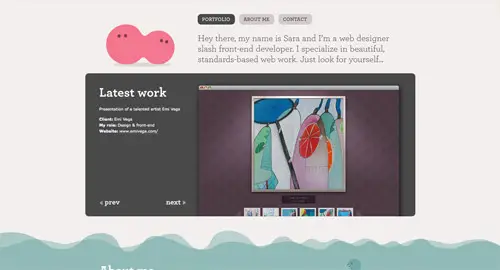
Sara Tušar Suhadolc

View the website

Pixel Fusion

View the website


Bill O’Reilly on Science: You Can’t Explain the Tides

06 Jan
Apparently, Bill O’Reilly has never heard of the moon. In a debate Tuesday with Dave Silverman, head of the American Atheist group behind this , the Fox host tried to prove the existence of God by citing the unknowable mysteries of the tides. “I’ll tell you why [religion is] not a...


Mike Tyson, pigeon fancier, gets his own TV show – Reuters

06 Jan

Mike Tyson, pigeon fancier, gets his own TV show
Reuters
Former heavyweight champion Mike Tyson smiles as he gestures at a panel for the Animal Planet documentary ''Taking on Tyson'' during the Discovery Networks ...

and more »