RSS
 

Trove of Dinosaur Feathers Found in Canadian Amber

15 Sep
<< Previous | Next >>
Discovery

An extraordinary collection of ancient feather fragments preserved in amber has opened a window into a lost world, one that now appears populated by dinosaurs covered in plumage as rich and varied as that of modern birds.

The feathers date to the end of the Cretaceous, about 85 to 70 million years ago. At that time, the forerunners of birds were well on their way to taking wing; dinosaurs like Epidexipteryx and Limosaurus, discovered in China in the last decade and dating to approximately 160 million years ago, possess relatively bird-like bone structures and hints of what might have been feathers.

Those hints have been interpreted -- and given life in eye-popping artist renditions -- as feathers, an interpretation that was plausible but still inconclusive.

But the latest fossils, found in Alberta and described Sept. 16 in Science, leave little doubt. The age of dinosaurs was a feathery one.

"These lovely specimens of significantly older, smaller dinosaurs from China have got some sort of covering about them. But you can't tell if it's hair or feathers because the fossils have undergone the ravages of time," said paleontologist Alex Wolfe of the University of Alberta, a co-author of the new study. "Those fossils don't preserve the kind of detail that we have in amber, which doesn't fossilize but entombs an object."

On the following pages, Wired.com looks at the new trove of feathers.

Above:

Feathers in Amber

Image: McKellar et al./Science

<< Previous | Next >>

See Also:

Citations: “A Diverse Assemblage of Late Cretaceous Dinosaur and Bird Feathers from Canadian Amber.” By Ryan C. McKellar, Brian D. E. Chatterton, Alexander P. Wolfe, Philip J. Currie. Science, Vol. 333 Issue 6049, September 16, 2011.

“Fossilized Feathers.” By Mark A. Norell. Science, Vol. 333 Issue 6049, September 16, 2011.


1926 This shot from the movie The General is the most expensive…

15 Sep


1926

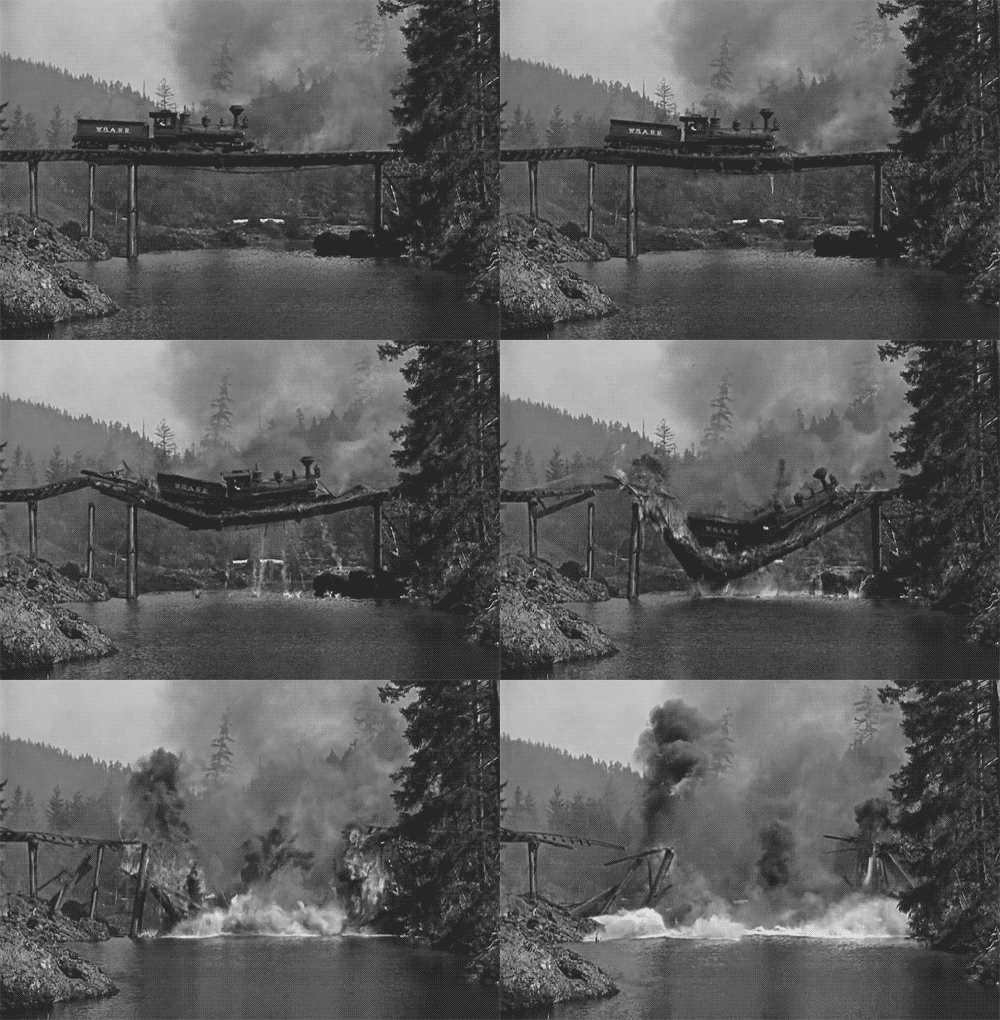
This shot from the movie The General is the most expensive shot in silent film history. It was filmed in a single take, that had to be perfect, with a real train and a ‘dummy’ engineer (notice the white arm hanging out the conductors window). Some of the locals who came to watch the filming, thought the dummy was a real person and screamed in horror; supposedly, one person even fainted.

(via Jaeger Amzallag)


before & after: wood paneled accent wall

15 Sep

If anyone is looking for fall home-decor inspiration, look no further than this amazing wood paneled wall by Lindsay and her husband, Drew. Using planks of beautiful alder wood and a combination of wood conditioner and a dark stain, Drew created an incredibly rich, dramatic accent wall for their bedroom. I love the combination of the tan houndstooth headboard with the warm wood, and I think I could just sit and stare at that beautiful wall all day. Wonderful job, Lindsay and Drew! — Kate

Have a before & after you’d like to share? Shoot me an email with your images right here! (Low res, under 500k per image, please.)

lindsay_before lindsay_after lindsay_after3 lindsay_afer2

Read more about Lindsay and Drew’s gorgeous wood accent wall after the jump!

(more…)


BBC Knowledge

15 Sep

This is totally sunshine and lollipops, but it has a good flow to it, and well, I totally wanted to know more about BBC Knowledge. Too bad it's not available in my region that is America.

[Video Link via datavisualization]


What Twitter Looked Like When It Was Born (Screenshot, History)

14 Sep

twttrscreenlogo.jpgTwitter, then known as twttr, was born just over 5 years ago - but in Twitter-time that's ancient history. What did it look like when it launched? I'd never seen a screenshot of the original Twttr home page until old school megablogger Jason Kottke posted one tonight, along with links to a few other oldies.

As you can see below, Twitter didn't have a hard time explaining itself at first. "If you have a cell and you can txt," the home page said, "you'll never be bored again...E V E R!" I guess when you've raised mountain upon mountain of venture capital and changed the world in multiple major ways, you've got to take yourself more seriously than that. (?) None the less, I like this old version of Twitter!

Sponsor

twttrscreen.jpg

Click for full size.

Look out, little Twttr, the President of the United States, Ashton Kutcher and these ladies you'll learn about in the future called The Kardashians are coming! From dorky simplicity has sprung unfathomable magic and banality.

Just five years, people! Amazing. Kottke's own blog, if you're not yet familiar with it, is almost 3X as old as Twitter and still a great read. You might even say that if you read it...you'll never be bored again...EVER!

The ReadWriteWeb team and myself personally are on Twitter as well. If you follow us there, well - you might be bored less often, I'll say that much ;)

Discuss


Maserati Kubang

14 Sep
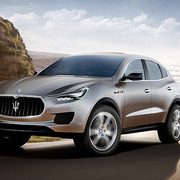
Sometimes the name really does fit the car. The Maserati Kubang ($TBA) is an updated, production-focused version of the company's prior SUV concept, sporting a fittingly funky front end, parts...

Visit Uncrate for the full post.


The Economist: The World’s Biggest Employers

14 Sep
Economist chart.

Economist chart.

Related posts:

  1. Matt Bors in The Economist
  2. Offiziere.ch: Human Security Report Charts an Outbreak of Peace
  3. The Diplomat: China’s Fighters Won’t Match U.S.


Guy Who Created The TSA Says It’s Failed, And It’s Time To Dismantle It

14 Sep
One of the politicians instrumental in creating the TSA, Rep. John Mica, who wrote the legislation that established the TSA, has apparently decided that the whole thing has been a failure and should be dismantled. He notes that "the whole program has been hijacked by bureaucrats."
“It mushroomed into an army,” Mica said. “It’s gone from a couple-billion-dollar enterprise to close to $9 billion.”

As for keeping the American public safe, Mica says, “They’ve failed to actually detect any threat in 10 years.”

“Everything they have done has been reactive. They take shoes off because of [shoe-bomber] Richard Reid, passengers are patted down because of the diaper bomber, and you can’t pack liquids because the British uncovered a plot using liquids,” Mica said.

“It’s an agency that is always one step out of step,” Mica said.

It cost $1 billion just to train workers, which now number more than 62,000, and “they actually trained more workers than they have on the job,” Mica said.

“The whole thing is a complete fiasco,” Mica said.
There's a lot more at that link. Now, one could (and perhaps should) note that when Mica wrote the legislation, his particular political party was in power, and now it's not. So the cynical voice might say that his words are somewhat politically motivated. And one can (and probably should) ask how it was that Mica didn't expect this kind of result. This is what the government does. It creates agencies that are then "hijacked by bureaucrats." While it's nice to see him realizing this now, it's too bad he didn't see it back then.

Permalink | Comments | Email This Story


Do users change their settings?

14 Sep

Back in the early days of PC computing, we were interested in how people used all those options, controls, and settings that software designers put into their applications. How much do users customize their applications?

We embarked on a little experiment. We asked a ton of people to send us their settings file for Microsoft Word. At the time, MS Word stored all the settings in a file named something like config.ini, so we asked people to locate that file on their hard disk and email it to us. Several hundred folks did just that.

We then wrote a program to analyze the files, counting up how many people had changed the 150+ settings in the applications and which settings they had changed.

What we found was really interesting. Less than 5% of the users we surveyed had changed any settings at all. More than 95% had kept the settings in the exact configuration that the program installed in.

This was particularly curious because some of the program’s defaults were notable. For example, the program had a feature that would automatically save your work as edited a document, to prevent losing anything in case of a system or program failure. In the default settings for the version we analyzed, this feature was disabled. Users had to explicitly turn it on to make it work.

Of course, this mean that 95% of the users were running with autosave turned off. When we interviewed a sample of them, they all told us the same thing: They assumed Microsoft had delivered it turned off for a reason, therefore who were they to set it otherwise. “Microsoft must know what they are doing,” several of the participants told us.

We thought about that and wondered what the rationale was for keeping such an important feature turned off. We thought that maybe they were concerned about people running off floppies or those who had slow or small disks. Autosave does have performance implications, so maybe they were optimizing the behavior for the worst case, assuming that users who had the luxury to use the feature would turn it on.

We had friends in the Microsoft Office group, so we asked them about the choice of delivering the feature disabled. We explained our hypothesis about optimizing for performance. They asked around and told us our hypothesis was incorrect.

It turns out the reason the feature was disabled in that release was not because they had thought about the user’s needs. Instead, it was because a programmer had made a decision to initialize the config.ini file with all zeroes. Making a file filled with zeroes is a quick little program, so that’s what he wrote, assuming that, at some point later, someone would tell him what the “real defaults” should be. Nobody ever got around to telling him.

Since zero in binary means off, the autosave setting, along with a lot of other settings, were automatically disabled. The users’ assumption that Microsoft had given this careful consideration turned out not to be the case.

We also asked our participants for background information, like age and occupation, to see if that made a difference. It didn’t, except one category of people who almost always changed their settings: programmers and designers. They often had changed more than 40% (and some had changed as much as 80%) of the options in the program.

It seems programmers and designers like to customize their environment. Who would’ve guessed? Could that be why they chose their profession?

(Big takeaway: If you’re a programmer or designer, then you’re not like most people. Just because you change your settings in apps you use doesn’t mean that your users will, unless they are also programmers and designers.)

We’ve repeated this experiment in various forms over the years. We’ve found it to be consistently true: users rarely change their settings.

If your application has settings, have you looked to see what your users do? How many have changed them? Are the defaults the optimal choice? Does your settings screen explain the implications of each setting and give your users a good reason for mucking with the defaults?


The evolution of overconfidence

14 Sep

The evolution of overconfidence

Nature 477, 7364 (2011). doi:10.1038/nature10384

Authors: Dominic D. P. Johnson & James H. Fowler

Confidence is an essential ingredient of success in a wide range of domains ranging from job performance and mental health to sports, business and combat. Some authors have suggested that not just confidence but overconfidence—believing you are better than you are in reality—is advantageous because it serves to increase ambition, morale, resolve, persistence or the credibility of bluffing, generating a self-fulfilling prophecy in which exaggerated confidence actually increases the probability of success. However, overconfidence also leads to faulty assessments, unrealistic expectations and hazardous decisions, so it remains a puzzle how such a false belief could evolve or remain stable in a population of competing strategies that include accurate, unbiased beliefs. Here we present an evolutionary model showing that, counterintuitively, overconfidence maximizes individual fitness and populations tend to become overconfident, as long as benefits from contested resources are sufficiently large compared with the cost of competition. In contrast, unbiased strategies are only stable under limited conditions. The fact that overconfident populations are evolutionarily stable in a wide range of environments may help to explain why overconfidence remains prevalent today, even if it contributes to hubris, market bubbles, financial collapses, policy failures, disasters and costly wars.