 This was a year of extremes: huge CG-heavy spectacles and low-budget gems. Most of all, 2009 made us feel the boundaries of cinema were stretched... for good and ill. Here are the 10 best and 10 worst films of 2009.
Best:
 10. The Road
One of the most significant SF-themed literary novels of the past decade, Cormac McCarthy's post-apocalyptic epic, was adapted into an arthouse film starring Viggo Mortensen and Kodi Smit-McPhee. And while the novel's themes didn't quite work as well in a movie format, and we had serious issues with the movie's sentimentality, we still found the movie's post-apocalyptic vision compelling. In an era where the apocalypse strikes inside cinema with alarming regularity, this was the grimmest and most unflinching look at a world where every ounce of green, and almost every spark of human kindness, has been destroyed.
 9. Gamer
This film, on the other hand, may have boasted slightly less of a literary pedigree. But if you love over-the-top, crazy exploitation films with a satirical edge — and we certainly do — then this tale of remote-controlled killers and sexbots will surprise you. It's easy to see why Gamer never got its props: It's crude, nasty, and full of day-glo wigs. But its plot, about a new biotech called "Nanex" that can replace your brain cells with remote-control devices that can never be removed, is creepy. And the architect of this evil scheme to own your brain? Is Dexter (Michael C. Hall). Who does a song-and-dance number about how much he enjoys yanking your synapses around. Really.
 8. Coraline
Veering back towards literary adaptations, there's Henry Sellick's gorgeous version of Neil Gaiman's Hugo award-winning horror/fantasy book. Forget Avatar — this was the most visually striking use of 3-D this year, and it was in the service of a story that felt like a classic fairy tale.
 7. Drag Me To Hell
Thank goodness Sam Raimi decided to take a break from Spider-Man movies and return to his horror roots, with this amazingly snarky, Evil Dead-esque journey into the heart of class insecurity. Charlene, a young loan officer at a bank, is desperate to advance up the corporate ladder and escape her hick past, not to mention impress her boyfriend's snobbish family. So she decides to deny a home loan to an old woman — who turns out to be the wrong person to mess with. As we said in our review, "Like all good horror, Drag Me To Hell takes real-life fears, dresses them up in blood-soaked costumes, and sets them running."
 6. Paranormal Activity
As we mentioned, this was the year of low-budget movies that focused on a few unforgettable characters, and this film managed to turn a low budget into maximum scariness. As we wrote in our review, "Nothing ever felt like padding or gratuitous "we're going to amp up the tension with cheap jolts" bullshit. The terror was raw and real - all the more so because it was so understated." But the real horror in this film is the dysfunctional relationship at its core, between a woman stalked by a demon and the boyfriend whose antics wind up making things much worse.
 5. Zombieland
This post-apocalyptic comedy swept us away with its cool style points — Columbus' rules for surviving the zombie apocalypse, Tallahassee's creative zombie-killing techniques — but it really won us over with its clever romance between Columbus and Wichita, and the way it conveyed the experience of geeky coming of age against a chaotic backdrop. Like all the best road movies, it's about the journey.
 4. Avatar
James Cameron's long-awaited out-of-body-experience movie was everything we were expecting: It was just as clunky and preachy as his original "scriptment" suggested it would be, and the native peoples were just as much of a "noble savage" stereotype as we'd expected. But it was just as beautiful and thrilling as we'd expected, too. People have been in the habit, lately, of saying that Avatar has great special effects and a terrible story — but in addition to the incredible CG world-building, the film also does have some thrilling performances from Sigourney Weaver and Sam Worthington, in particular. It's not just the cool flying dragons that suck you in — it's the characters.
 3. Star Trek
Gene Roddenberry's optimistic space opera needed a long rest after the blunders that were Enterprise and the last two movies. In fact, we weren't sure Trek's tired old saws ever needed to be brought back. But J.J. Abrams somehow managed to make Trek seem fresh again, mostly by giving Kirk and Spock a new backstory. Unexpectedly, we found ourselves caring what happened to these guys again, and the scene where Sarek finally admits he married Amanda because he loved her is surprisingly powerful. For the first time in too long, Star Trek became a universe where anything could happen — even the destruction of Vulcan. Who knew Trek could be unpredictable?
 2. Moon
Sam Rockwell brought enough conviction and character for twenty actors to this story of a lonely worker trapped in a lunar mining outpost. His loneliness and brushes with madness are captivating — and that's even before there turn out to be two of him at once. By the time this psychological thriller unravels into a story of an evil corporation treating its workforce as a disposable commodity (literally), we're so wound up into Sam Bell's loneliness and yearning to go home that the fate of both Sams becomes more urgent than the fate of entire worlds.
 1. District 9
It's easy to think of this film as just a polemic against Apartheid and the mistreatment of refugees — but the story of aliens herded into shantytowns is much more than that. The story of Wikus Van De Merwe, a total bastard who enjoys watching alien children pop like popcorn, feels uncomfortably like our story. After Wikus gets infected with some kind of alien goo, he starts to discover what it's like to be one of the downtrodden aliens, but this revelation doesn't particularly make him a more noble person, at least not for most of the movie. Brilliant production design adds to this film's sense of stark realism, and even some ugly Nigerian stereotypes fail to detract from the film's unforgettable portrait of human cruelty and alien family values. This was the film, more than other, that stuck in our heads long after watching it.
Honorable mentions: I really wanted to give a shout out to Men Who Stare At Goats and Push, two films that got unfairly panned this past year. Goats is way more fun than people gave it credit for, and had occasional moments of total brilliance, especially from Jeff Bridges. Push is stylishly shot in Hong Kong, full of homages to Wong Kar-Wai, and features world-builiding about mutant powers and secret organizations that feels lived-in and clever.
Worst:
 10. Surrogates
This film could have been terrific — based on a brilliant graphic novel written by Robert Venditti, this "shut-ins go out in robot bodies" epic is a potent metaphor for our relationship to technology. Unfortunately, the film version, starring Bruce Willis, is a cluttered, clunky mess. It's every dumb action-movie set piece jammed together with bits of chewing gum, plus an incredibly preachy screenplay that doesn't trust the audience to reach conclusions on its own. And that's really the worst sin a dystopian movie can commit: force-feeding us messages, because the dystopia isn't powerful enough to reach us on its own.
 9. The Fourth Kind
Even as Paranormal Activity was making the Blair Witch-style "real-life recordings" vibe seem fresh again, The Fouth Kind was trying to pass off fake alien abduction tapes as real, and unfortunately the film-makers put more effort into trying to hoodwink the press than they did into crafting a compelling movie. The actual film is a mish-mash of bad "archival" footage, unscary alien abductions, and flaky plot twists like the idea that a professor can speak ancient Sumerian because he's seen some texts.
 8. New Moon
There's something to be said for a book and movie franchise that has converted so many new people, especially girls, into SF/fantasy lovers. But still, this movie slathered us with cheese and bored us with long stretches of Bella moping after Edward, who's decided they can't be together. Edward starts appearing to Bella, Obi Wan-like, as she becomes an adrenaline junkie and runs around with shirtless Jacob. The moments where the film winks at the audience, or veers into outright self-parody, can't quite make up for the goopiness of much of the rest.
 7. X-Men Origins: Wolverine
If we had a crane with a camera on it following us around all the time, we would feel tempted to look up at the ceiling and howl as well. Where can we get one of those? The fourth film in the X-Men saga continued X3's slide into mediocrity, with too many random mutant cameos and a campy mutant self-discovery plot that felt instantly forgettable, even without a memory-erasing magic bullet. At no point in this endless film do Logan and Sabretooth feel like brothers, and we don't really care which one of them kills the other. Is there any way that Ryan Reynolds' Deadpool movie can make up for this disaster? We can only hope.
 6. The Time Traveler's Wife
We loved Audrey Niffenegger's clever, disciplined time-travel novel just as much as we hated the schlocky, smug movie version. The film excised some of the coolest parts of the novel, and substituted a lot of cookie-cutter romantic-dramedy whininess and angst. What was a classic love story, as well as a insightful look into the way in which we're all time-travelers because we're constantly reliving our pasts and dreaming of our futures, becomes a mindless (and heartless) exercise in pouting as character development. All the more disappointing, because it had such great material to work with.
 5. 2012
It's tempting to give this film a free pass, because who expected greatness, or anything other than explosions, from Roland Emmerich's umpteenth disaster film? But it's worth calling out this film for its brain-dead destruction porn and focus on special effects to the total exclusion of characters, or anything really. Bad science, bad writing, bad acting... but most of all, it's kind of boring, and you really have to turn off your brain to enjoy any of it. To quote from some of the comments in our review: "I didn't care who lived or died," "I felt dead inside," "My problem with this movie isn't the rampant destruction, but the boringness in between."
 4. Knowing
Making fun of a Nic Cage movie these days almost feels like challenging a dyslexic to a spelling bee. But really. This film was so insultingly bad, that we can't let it slide. Cage plays a college professor, whose idea of teaching astrophysics is to hold model planets and say stuff like, "Hey, man. The sun is like, really, really hot. Did you ever think that maybe things happen for a reason?" It's like stoner astrophysics 101. And then he gets hold of a time capsule from the 1950s that's full of numbers which somehow predict every disaster, including the end of the world. Even if you can ignore coincidences like a plane crashing next to the highway where Cage is driving, you'll be clutching your head by the time this movie's final plot twist is revealed. If this is Knowing, then ignorance really is bliss.
 3. Pandorum
Zombies infest a spaceship — how could that be bad? Well, um... how about if it's zombies on a spaceship where Dennis Quaid is doing a crappy pastiche of Fight Club? How then? We never knew space madness could be so boring. Actually, the biggest problem with this film isn't Quaid's endless freak-out, or the random cannibal guy who's diagrammed the entire plot in graffiti, it's the boredom. The makers of the film seem to have mixed up suspense with "nothing happening for long stretches," as our heroes skulk around dark tunnels endlessly. It could have been so much better, if the themes of reclaiming your pride as an officer and sticking together had been foregrounded. Even a cool ending can't save this stew.
 2. Terminator Salvation
We debated whether to include T4 among the worst letdowns of the past decade — but there were already so many from 2009 on the list. It's shameful to admit it now, but we expected more from this film, thanks to the reunion of The Dark Knight's star and writer, Christian Bale and Jonathan Nolan. Instead, what we got was the giant head of Helena Bonham Carter delivering exposition. Sam Worthington does his best with the role of Marcus Wright, who discovers he's a cyborg, but he's hobbled by a nonsensical plot. And Bale is a major disappointment as John Connor — it's hard to believe anyone could make us miss Nick Stahl.
 1. Transformers: Revenge Of The Fallen
We celebrated this film as the ultimate apotheosis of Bunuel-style surrealism, but if you're expecting it to make a lick of sense, you might as well expect ants to climb out of your hand. Honestly, 2012 only wishes it could be as dumb, as massive — and yes, as boring — as this clunker. These robots can turn themselves into anything — except for compelling characters. And unlike 2012, in which the action set pieces are the punctuation in between long boring sequences, this film's action sequences are the most boring part, because it's hard to tell what's supposed to be going on, and we don't really care anyway. If 2009 was the year that giant CG rainbow showers finally conquered movie screens, then Transformers 2 was the worst offender.
 Chinese writers condemned Avatar, a branch of the Russian communist party condemned it, the Vatican has weighed in, and other groups are endlessly debating its political meaning. What makes people respond so strongly to this flick? It's the realism.


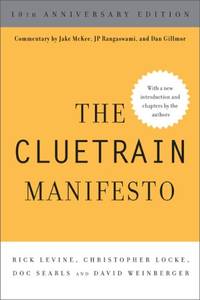 I read the Cluetrain Manifesto in when it was published in 1999. We had just raised capital for the startup I co-founded, and I was flying back and forth from San Francisco to Toronto to Boston, which left me with a lot of reading time. As someone who was a) ambivalent about the corporate world, b) excited about the net, and c) founding a company, I found in Cluetrain a great deal of comfort, inspiration and fire.

 But the legal changes introduced in the years after Fahrenheit 451 did more than just extend terms. Congress eliminated the benign practice of the renewal requirement (which had guaranteed that 85% of works and 93% of books entered the public domain after 28 years because the authors and publishers simply didn't want or need a second copyright term.) And copyright, which had been an opt-in system (you had to comply with some very minor formalities to get a copyright) became an opt out system (you got a copyright automatically when you "fixed" the work in material form, whether you wanted it or not.) Suddenly the entire world of informal and non commercial culture -- from home movies that provide a wonderful lens into the private life of an era, to essays, posters, locally produced teaching materials -- was swept into copyright. And kept there for the life of the author plus 70 years. The effects were culturally catastrophic. Copyright went from covering very little culture, and only covering it for a 28 year period during which it was commercially available, to covering all of culture, regardless of whether it was available -- often for over a century. Unlike Fahrenheit 451, the vast majority of the culture swept into this 20th century black hole was not commercially available and, in most cases, the authors are unknown. The works are locked up -- with no benefit to anyone -- and no one has the key that would unlock them. We have cut ourselves off from our own culture, left it to molder -- and in the case of nitrate film, literally disintegrate -- with no benefit to anyone. The works may not be physically destroyed -- although many of them are; disappearing, disintegrating, or simply getting lost in the vastly long period of copyright to which we have relegated them. But for the vast majority of works and the vast majority of citizens who do not have access to one of our great libraries, they are gone as thoroughly as if we had piled up the culture of the 20th century and simply set fire to it; and all this right at the moment when we could have used the Internet vastly to expand the scope of cultural access.
 WOO:
Rise, and speak wisely, man--but hark; I see thy rug, as woven i'the Orient, A treasure from abroad. I like it not. I'll stain it thus; ever thus to deadbeats.
WOO:
Rise, and speak wisely, man--but hark; I see thy rug, as woven i'the Orient, A treasure from abroad. I like it not. I'll stain it thus; ever thus to deadbeats.
 When
When 


