One of my blogging policies is to not engage with trolls. I don’t answer their nasty emails or respond to their comments. Life is too short. But every once in a great while, a troll can send me somewhere interesting. And that’s what happened in the dozens of recent comments that referenced the same “white paper†by the Oxford bioethicist Julian Savulescu, “Fluoride and the Future: Population Level Cognitive Enhancementâ€. Here’s a sample comment:
Jonah’s friend and colleague Savulescu suggests that the government add ritalin and prozac to the public water supply. Now, sadly if I speak against that dangerous idea I am labeled a blowhard and conspiracy theorist. Fine. I’m ok with that. Guilty as charged. Please read Julian Savulescu’s white paper “Fluoride and the Future: Population Level Cognitive Enhancementâ€. He’s your friend Jonah.
For the record, I don’t know Professor Savulescu. So I googled this “white paper†– apparently, a “white paper†is how conspiracy theorists make an academic blog post sound really scary – and found this utilitarian proposal:
Fluoridation of the water is an example of human enhancement. Tooth decay is a part of the human condition but we now have the ability to prevent it through a safe, cheap, easy intervention – adding fluoride to the water. Many parts of the civilized world have been employing this strategy for decades with dramatic success. England is now debating whether to fully embrace this simple enhancement technology.
Fluoridation is the tip of the enhancement iceberg. Science is progressing fast to develop safe and effective cognitive enhancers, drugs which will improve our mental abilities. For years, people have used crude enhancers, usually to promote wakefulness, like nicotine, caffeine and amphetamines. A new generation of more effective enhancers is emerging modafenil, ritalin, Adderral and ampakines and the piracetam family of memory improvers. Students and professionals are using these to gain a competitive edge, just as athletes are doping in sport.
But once highly safe and effective cognitive enhancers are developed – as they almost surely will be – the question will arise whether they should be added to the water, like fluoride, or our cereals, like folate.
It seems likely that widespread population level cognitive enhancement will be irresistible. Studies based on removing lead, which reduces cognitive ability, from the water and paint, have estimated that a 3 point IQ increase would lead to: 25 percent reduction in the poverty rate, 25 percent few males in jail, 28 percent fewer high school dropouts, 20 percent fewer parentless children, 18 percent fewer welfare recipients, and 15 percent fewer out of wedlock births.
I think it’s pretty obvious that Savulescu is being deliberately provocative here. (It’s worth stating for the record that, contrary to the paranoid delusions of the trolls, there is no government conspiracy to put stimulants in the water. This is an academic philosopher blogging about a hypothetical. I can’t believe I had to spell that out.) What Savulescu is trying to explore is the hazy line between ordering a double espresso at Starbucks and snorting a bit of Ritalin. Both compounds are uppers, and both induce a similar set of cognitive effects: sharpened attention, improved learning and memory, temporary boosts in IQ scores, etc. Society has clearly benefited from the invention of caffeine (especially since the morning coffee replaced the morning beer as the 17th century drink of choice), so why shouldn’t we also put a touch of amphetamine in the water?
Well, I think there are many good reasons why this is a very bad idea. Last year, I had an article in Nature on the thirty-three different rodent strains that show dramatically enhanced learning and memory. The genetically tweaked animals can learn faster, remember events for longer and are able to solve complex mazes that confuse their ordinary littermates. At first glance, these strains seem like the rodent of the future, a case-study in the infinite possibilities of cognitive enhancement. But I think that’s a blinkered view. When you look closer at the mice, it becomes clear that many of these animal models of enhanced cognition co-exist with subtle negative side-effects. Consider a mutant strain that overexpresses adenylyl-cyclase in the forebrain: Although the mice exhibit improved recognition memory and LTP, they show decreased performance on memory extinction tasks. (In other words, they struggle to forget irrelevant information.) Other strains of “smart mice†excel at solving complex exercises, such as the Morris Water Maze, but struggle with simpler conditions. It’s as if they remember too much.
And then there’s “Doogie,†the rodent strain named after the fictional television prodigy Doogie Howser. These mice overexpress a particular subunit of the NMDA receptor, known as NR2B, which allows their receptors to stay open for twice as long as normal. The end result is that it’s easier for disparate events to get linked together in the brain. The only downside is that Doogie mice also seem to suffer from increased sensitivity to chronic pain. Their intelligence literally hurts.
And these tradeoffs don’t just exist in mice. Martha Farah, a neuroscientist and neuroethicist at Penn, is currently looking at the tradeoff between enhanced attention – she gives subjects a mild amphetamine – and performance on creative tasks. As she told me for the Nature article, “The brain appears to have made a compromise in that having a more accurate memory interferes with the ability to generalize…You need a little noise in order to be able to think abstractly, to get beyond the concrete and literal.â€
That’s also the lesson of one of the few case studies of an individual with profoundly enhanced memory. In the early 1920s, the Russian neurologist A.R. Luria began studying the mnemonic skills of a newspaper reporter named Sherashevsky, who had been referred to the doctor by his editor. Luria quickly realized that Sherashevsky was a freak of recollection, a man with such a perfect memory that he often struggled to forget irrelevant details. After a single read of Dante’s Divine Comedy, he was able to recite the complete poem by heart. When given a random string of numbers hundreds of digits long, Sherashevsky easily remembered all the numbers, even weeks later. While this flawless memory occasionally helped Sherashevsky at work – he never needed to take notes – Luria also documented the profound disadvantages of such an infinite memory. Sherashevsky, for instance, was almost entirely unable to grasp metaphors, since his mind was so fixated on particulars. “He [Sherashevsky] tried to read poetry, but the obstacles to his understanding were overwhelming,†Luria wrote. “Each expression gave rise to a remembered image; this, in turn, would conflict with another image that had been evoked.â€
For Luria, the struggles of Sherashevsky were a powerful reminder that the ability to forget is just as important as the ability to remember. As Jorge Luis Borges wrote in Funes the Memorious, a short story about a man with a perfect memory that was likely inspired by Luria’s case-study, “To think is to forget a difference, to generalize, to abstract. In the overly replete world of Funes, there were nothing but details.â€
These unintended consequences are why I think it’s way too soon to start thinking about cognitive enhancement for people without cognitive deficits. (It’s also why I don’t dabble in modafinil or adderral – I’ll stick with my cappuccinos, thank you very much.) After all, if we can’t even improve the intelligence of mice without causing worrisome side-effects, then what hope is there for the endlessly complex human cortex, full of feedback loops and interacting pathways? The brain is a precisely equilibrated machine, constructed over tens of millions of years by natural selection. Too many of our “improvements†come with a steep cost.



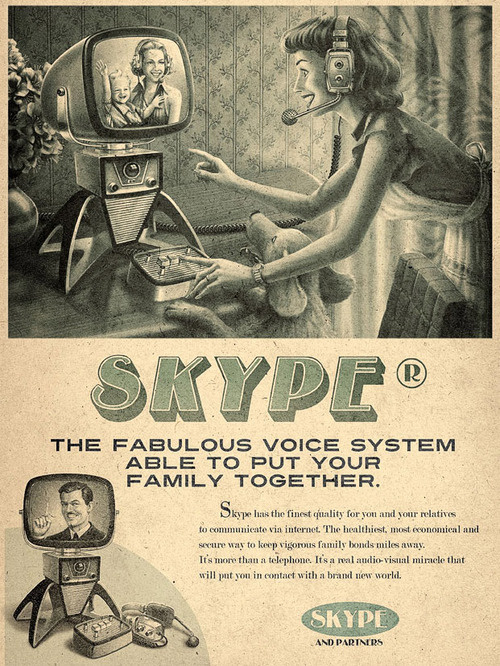 Brazil's Moma ad agency created a


 Google, which is engaging in extensive book digitization projects, recently set out to determine the number of distinct print books currently in existence:
