
Archive for the ‘Uncategorized’ Category
Google Reader (32)
09
Sep
It's Time for the News Aggregators to Come Clean
09
Sep
Steve Rubel via Micro Persuasion
shared by 4 people


A news story from 2002 about United Airlines filing for bankruptcy tripped up investors yesterday when it re-appeared on Google News, Barry Schwartz reports. The Google News team follows with their own explanation. However, the entire issue raises the lack of transparency that permeates the major news aggregation sites. It's time for them all to come clean.
According to Reuters consumers are increasingly turning to news aggregation sites for their info fix because of the growth of the mobile web and an appetite for broad perspectives. These sites, which include Google News, Yahoo News, Topix and Daylife, differ from RSS readers. Feed readers also roll up news but they put the user in complete control of the sources they consume.
News aggregation sites operate without editors. So, they're prone to the occassional glitches like the one that occurred yesterday. The problems are deeper, however. Most of these sites also roll up blog content and they don't tell you that. Yahoo just recently quietly started to links to blogs.
The problem is that these sites don't delineate blogs from news sources. As we all know the quality can range here and that presents a challenge for the reader in determining who to trust.
Although this specific incident with United Airlines did not invovle blogs, it underscores the lack of transparency that permeates these sites. They are doing everyone a disservice by not providing detailed information on who they chose aggregate and why they roll up some sites and ignore others.
A friend told me about it.
09
Sep

Microsharing becomes the top story
09
Sep
Laura Fitton via Pistachio
shared by 5 people
![Reblog this post [with Zemanta]](http://img.zemanta.com/reblog_e.png?x-id=95bb8b40-dce7-4a6f-a8d8-92c962b1a005)


by Mark Dykeman of Broadcasting Brain
There’s been a lot of speculation this year about when microsharing will finally have its moment in the spotlight and move firmly into the mainstream. A BusinessWeek Special Report: CEO Guide to Microblogging may be the sign that early adopters have looked for.
This special report includes several features on the capabilities of tools like Twitter, Pownce, and Jaiku. The articles cite how well-known companies like JetBlue, Dell, and GM are taking advantage of the power of what we call microsharing. Whether a company is listening for customer feedback, answering questions, or otherwise helping the customer meet their needs, large companies are finding the customer at point of need.
Here’s a quick guide to the contents of the Special Report:
- How Companies Use Twitter to Bolster Their Brands provides a few examples of how companies are reacting to consumers. JetBlue reacted with stunning speed to a Tweet about one of their terminals. GM corporate communications helped a customer in need buy a Saturn. Southwest Airlines empathized with a customer who lost his luggage.
- Brands That Tweet – Comcast, Kodak, Newell Rubbermaid, Whole Foods Market, and Zappos are other prominent examples of brands that are listening and speaking on Twitter, extending their customer service presence.
- CEOs’ Take on Twitter – Twitteriing CEO profiles: how 18 leaders and entrepreneurs are using Twitter for work and play.
- Getting Intimate (With Customers) On Twitter – a look at how companies are conversing and sharing directly with their customers. The customer has the microphone and is in the driver’s seat – companies are getting onboard for the ride… and the conversation.
- AMC’s MadMen: Running Amok on Twitter reports on the apparent “Fan Fiction†characters from the popular AMC TV show who have been Twittering in character since mid-August. (Our post on this trend).
Just one example from the report is that H&R Block, which helps customers through one of the least sexy tasks ever, is using a tool like Twitter to listen to its customers. Web 2.0 technologies coupled with a focus on listening, are helping the venerable tax preparation institution to better introduce itself to younger customers. H&R Block is a good example of reaching out to a previously underserved segment of its potential customer base.
The report provides general tips and examples that will be familiar for those who have already adopted 140 character exchanges of links, information, and socialization into their daily routines. What’s significant is that businesses not already visiting these online gathering areas will find it increasingly harder to ignore the unfolding opportunities. When BusinessWeek targets a special report to the C-suite, the trend is certainly growing, a few more executives will feel the concept “tip†in their minds, and more will start exploring the space.
Is microsharing mainstream yet? Maybe not. But it’s a whole lot closer than it was last week.


Winner of the Personal Visualization Project is…
08
Sep
Nathan via FlowingData
shared by 4 people


Last week was the end of our FlowingData personal visualization project. I asked readers to collect data about themselves or their surroundings and then visualize it some way. Thank you to everyone who participated. It put a smile on my face every time I got an email with "summer project" in the subject line :).
The Winner is...
While I enjoyed all the entries (and I hope you all enjoyed making them), there can only be one winner. The winner is Tim Graham who took manual personal data collection to another level. From email spam, to beverage consumption, to aches and pains, Tim embraced the spirit of self-surveillance. He even made his personal data available in the forums. Congratulations, Tim!
Here are Tim's personal data visualization projects along with entries from Brian, John, Kevin C, Kevin M, Lisa, Said, Stacey and Joel, and Tony. Thanks again everyone for participating, and I hope the rest of you will consider getting in on the self-introspection next time.
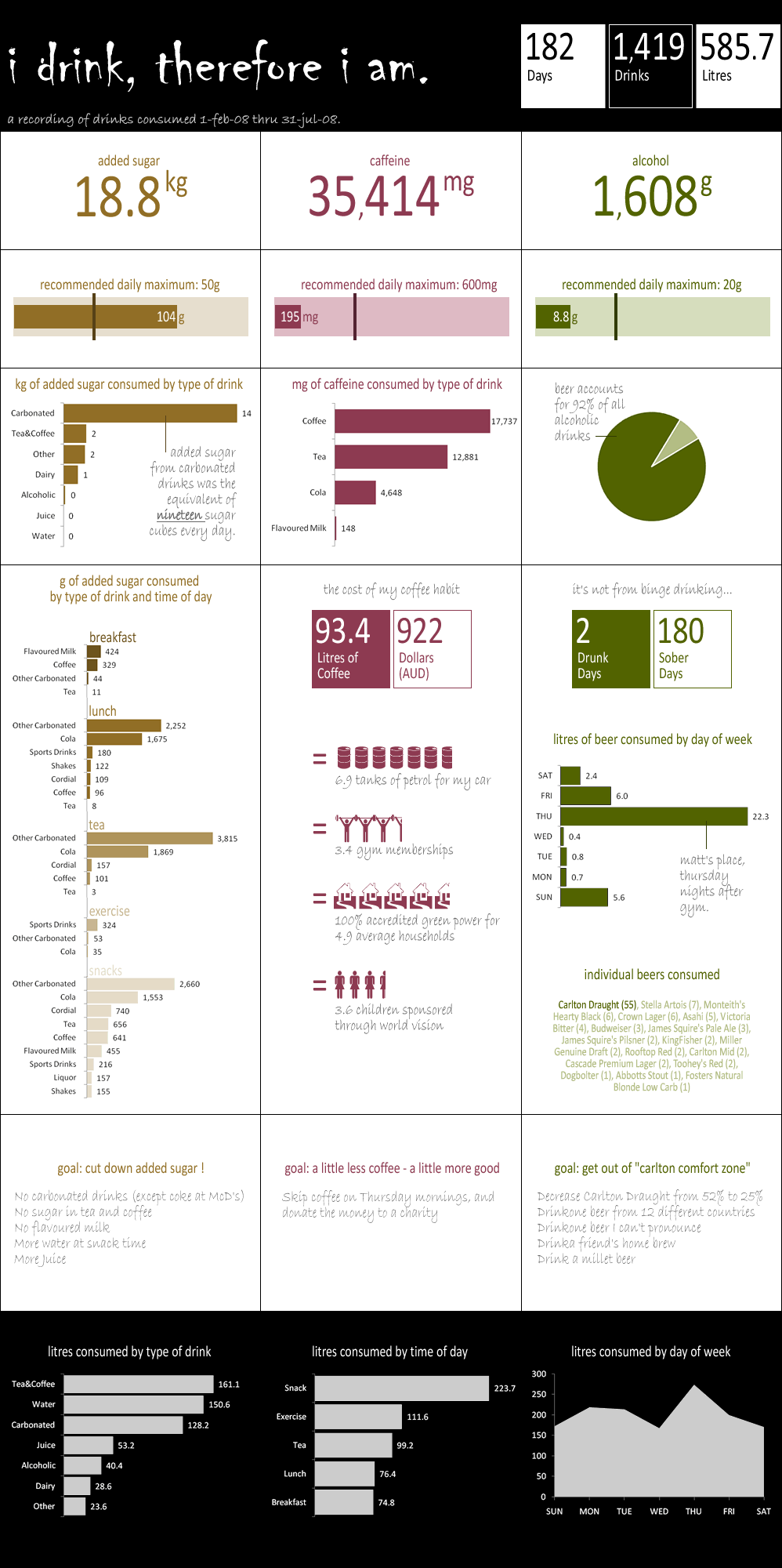
I Drink, Therefore I Am
I originally thought this was all alcoholic beverages. I was going to tell Tim that he might have a problem. Luckily though, it was all beverages he's consumed over the past few months. That's some serious discipline.
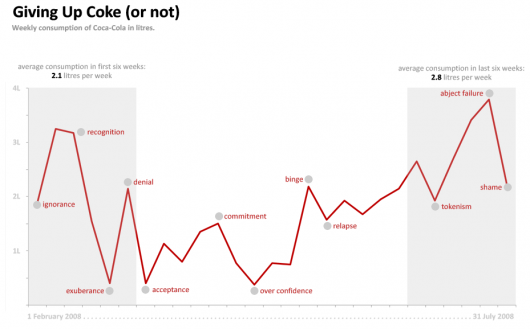
This one focuses on Tim's Coke consumption. It's a short story of a losing battle against his soda addiction.
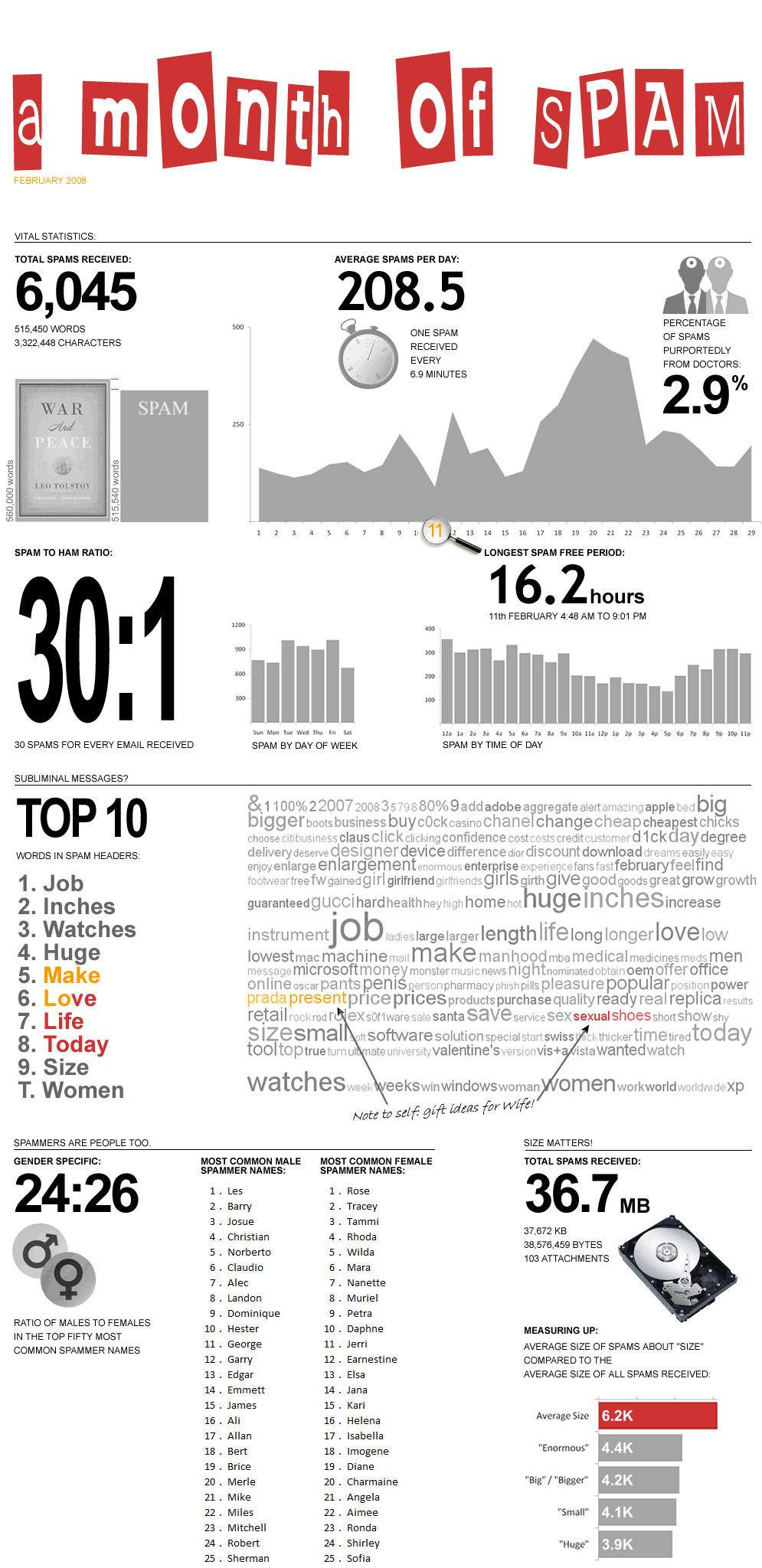
A Month of Email Spam
How about a look at a month of email spam? Almost as many words of spam as in War and Peace.
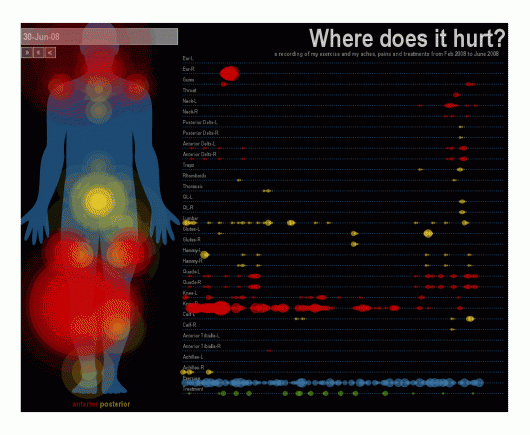
Ouch, My Body Hurts
This is actually an animated aches and pains chart implemented in Processing. Watch as pains fire off on poor Tim's deteriorating body.
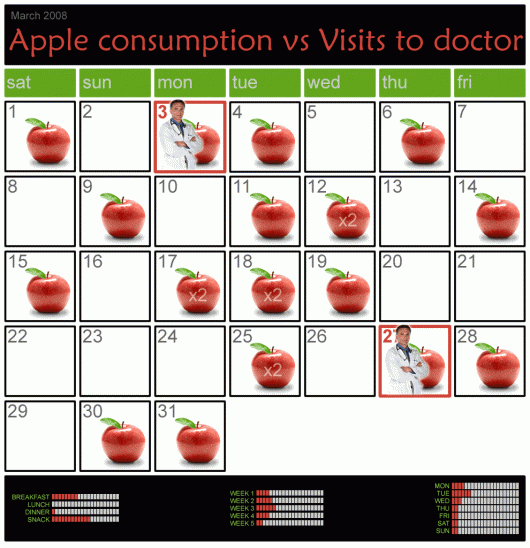
An Apple a Day...
A calendar of apples and doctors...
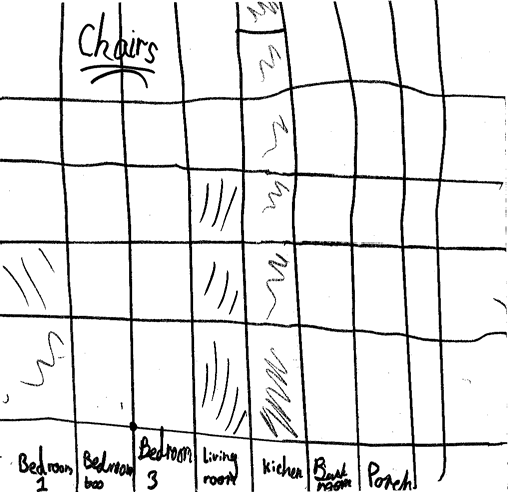
Chairs in the Kitchen
...and even Tim's daughter got in on the action. Here's her very first chart. It shows number of chairs by room. Proud father.
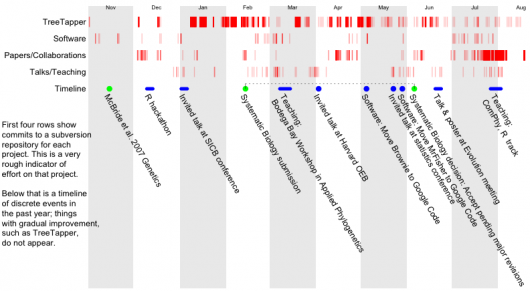
Commits to the SVN Repository
Brian is a postdoc part of an NSF-funded project and displayed commits to subversion, which he used to manage code and documents. He found that there tended me more commits to the repository as deadlines approached.
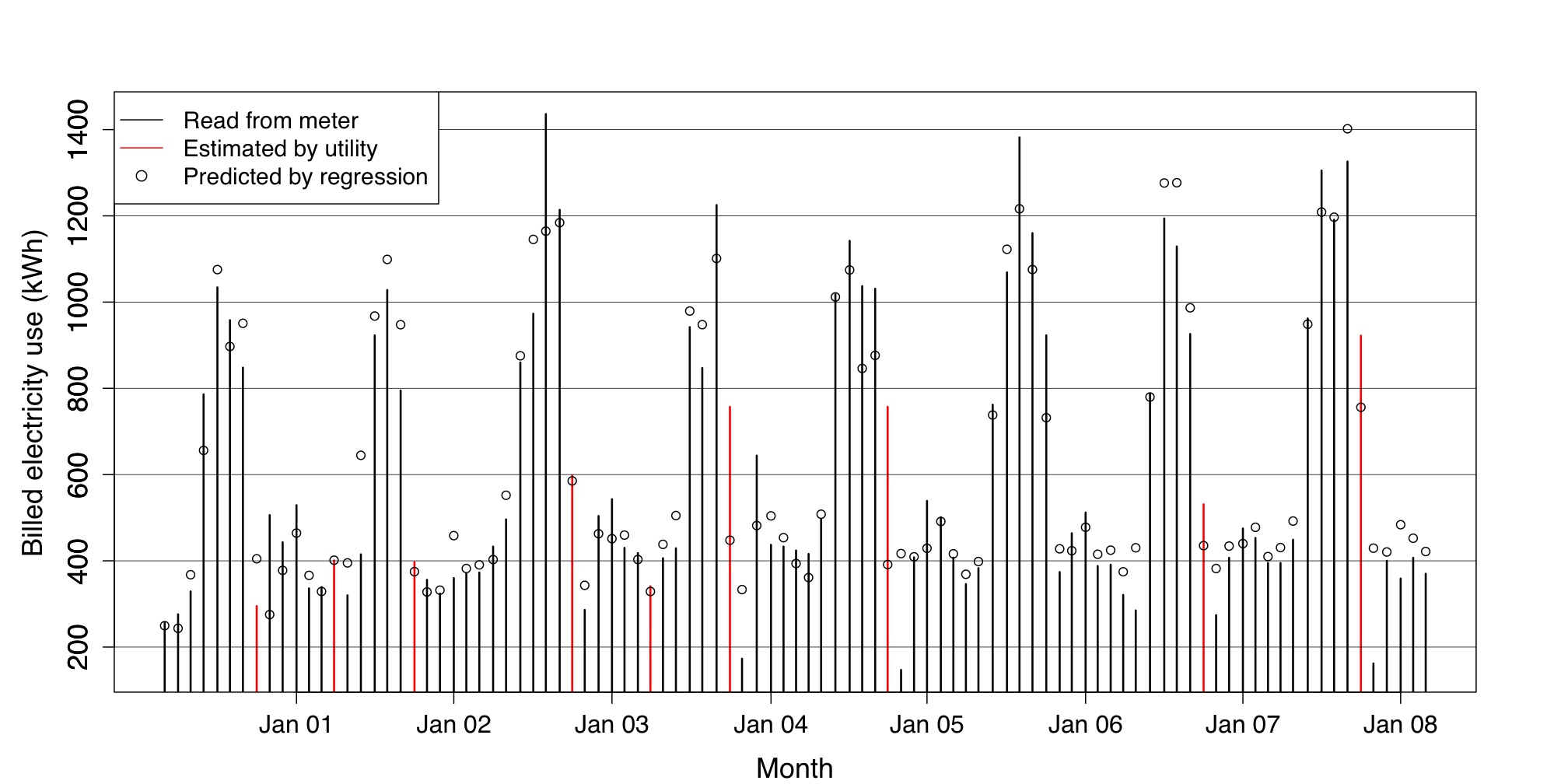
Is the Power Company Ripping Me Off?
Hey look - it's a chart made in R! John bought a new house in 2000 and charted billed electricity use – estimated by the utility company and the regression.
From John, "Every once in a while, the electric company gets lazy and estimates the meter reading, rather than coming to my house to read it. In the attached graphic, I wanted to see those months in particular to determine whether the utility company tends to over-estimate or under-estimate my electricity use in those months, as compared with my own estimation formula."
Sex
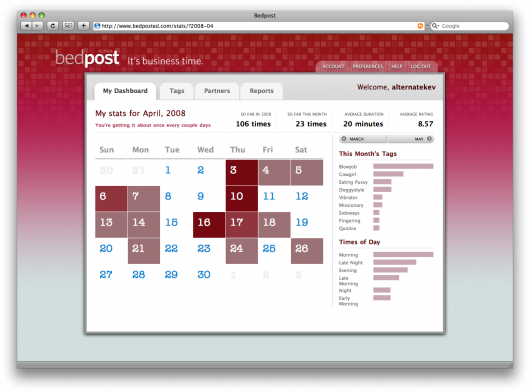
We saw this one earlier during the summer. Kevin C sent in BedPost, his project currently in private beta to track private time with your nighttime buddy.
Are You Happy Today?
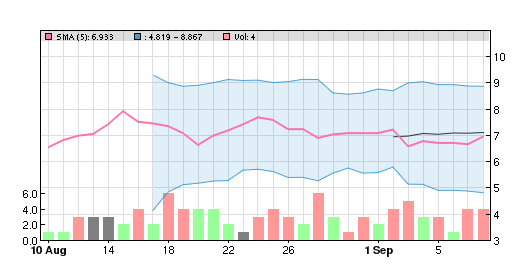
Kevin M has his own application, LifeMetric, which lets you enter how you feel and then compare emotions with other users.
How Do I Spend My Time Every Day?
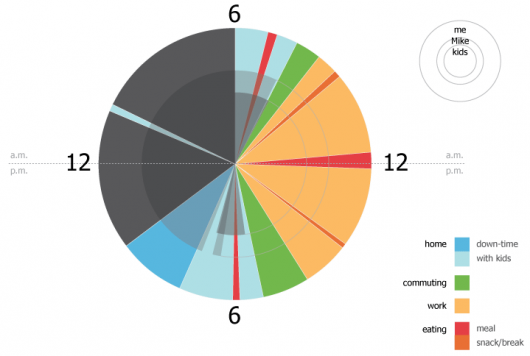
Lisa has been tracking how she (and her family) spends time. Below is one day that shows how she (outside circle) and her husband (middle circle) and her kids spend their day.
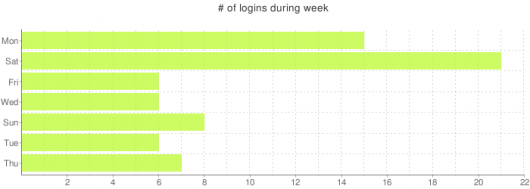
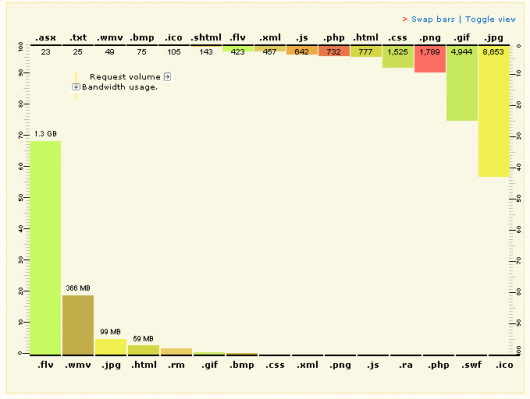
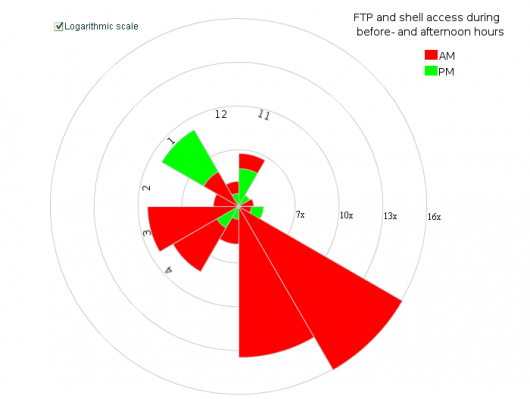
SSH and FTP Logins
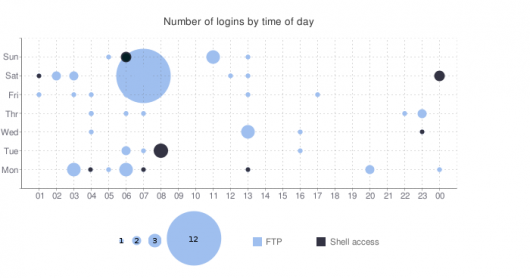
Similar in spirit to Brian's visualization, Said put together a series of visualizations of his SSH and FTP logins. It looks like Said is a morning person?
Old School Networks
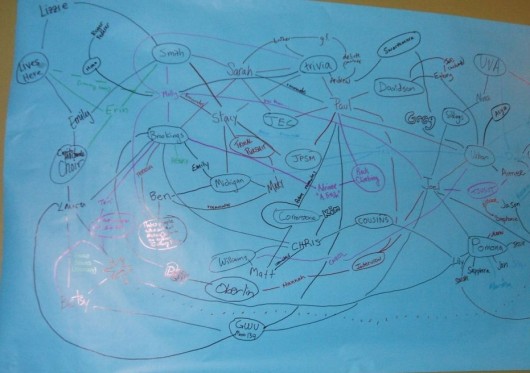
Stacey and Joel held a PieFest with some friends. While they had everyone together they drew up a network. People wrote their name and drew lines to the people they knew.
Music Interest
Tony put his iTunes library through Wordle. He's a big fan of various artists.

That's All, Folks!
There you have it. The FlowingData personal visualization project. As you can see, there's lots of personal data for you to collect, visualize, and analyze, so go out and have some fun. Can you think of data worth collecting not here? Let us know in the comments.
Again, thank you to everyone who participated. I enjoyed every entry, and I'm sure FlowingData readers do too.


Peter Thiel: Best Predictor of Startup Success Is Low CEO Pay
08
Sep
Erick Schonfeld via TechCrunch
shared by 4 people


 In a long-ranging discussion today at TechCrunch50, investor Peter Thiel (PayPal, Facebook, Slide) gave his thoughts on what is the best predictor of startup success. At the Founder’s Fund, one of the most important factors he likes to look at before deciding to invest in a startup is how much the CEO is paying himself. (This is also a factor that one of his investments, YouNoodle, looks at to value private startups). Says Thiel:
The lower the CEO salary, the more likely it is to succeed.
The CEO’s salary sets a cap for everyone else. If it is set at a high level, you end up burning a whole lot more money. It aligns his interest with the equity holders. But [beyond that], it goes to whether the mission of the company is to build something new or just collect paychecks.
In practice we have found that if you only ask one question, ask that.
Person Peter Thiel
Right click for SmartMenu shortcuts
In Startupland, everybody should be working towards the same goal: that big juicy exit. That’s the only payday any CEO should be worried about (even though more than half of them will never get it).
Information provided by CrunchBase
Crunch Network: CrunchGear drool over the sexiest new gadgets and hardware.