RSS
 

10 New Twitter Tools That Will Make Your Life Easier

30 Mar

10 New Twitter Tools That Will Make Your Life Easier

Twitter continues to add a staggering amount of 460,000 users each day. In order to be fully equipped to stay on top of this popular web service, you can use Twitter tools to help. Here are 10 fresh, new Twitter tools that you can use to achieve greater productivity on Twitter-related tasks.

1. The Archivist
The Archivist

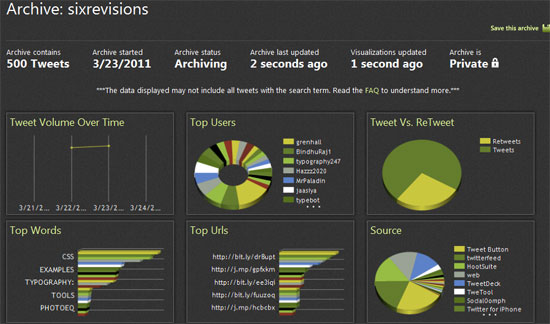
This tool gives you insights and data about a specific search term. Simply search for terms that interest you and The Archivist will present you with plenty of information such as how much the term has been tweeted, top users that use the term, how many retweets the term has gotten, and more. It also lets you search for topics and hashtags, and gives you amazing visualizations about the Twitter activity surrounding them.

The Archivist allows you to download the data so you can go and pull it into presentations, reports and other analytics tools.

2. Tweriod

Tweriod

This Twitter tool analyses your tweets and your followers’ tweets and then gives you a graph of times of the day and days of the week your tweets will have the most visibility. Super simple and very useful. It’s an app that attempts to answer one question: What times are your followers most active?

Tweriod saw development at a great pace in the past few weeks. It started out as a simple service a few months back, but has recently received an overhaul in its design and in its algorithm.

3. ManageFlitter
ManageFlitter

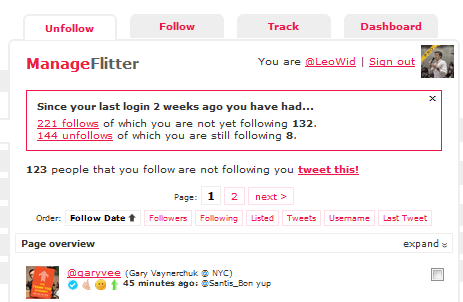
ManageFlitter has been around for a while; however, a few weeks ago, the app rolled out an overhaul and launched a pro version of its service. Managing your Twitter followers is now easier than ever before.

With ManageFlitter, you can unfollow Twitter accounts that don’t follow you back, users that clutter your Twitter stream, and people who’ve stopped using Twitter.

There is no signup or registration process; you simply connect using Twitter’s authentication system and off you go.

4. Buffer

Buffer

(Full disclosure: I work at Buffer.) There exist many different tweet-scheduling services out there. However, Buffer gives you a simpler and hassle-free solution than other services you might know of (such as Hootsuite or CoTweet). Buffer allows you to add many tweets at once, without flooding your followers with too many tweets back to back. All you do is throw a few tweets in your Buffer and the app then schedules them for you throughout the day. No need to figure out when to tweet. It gives your Twitter stream better consistency.

Another great feature is that you’re able to add tweets to your Buffer from any web page using a browser extension.

5. Hashable

Hashable

This high profile New York City startup gives you a chance to document all the relationships you make on Twitter and other social networks. It’s a new way of sharing the people you have met and can become an online space you can always go back to as a contact list.

It works in a very simple manner: You simply tweet out hashtags alongside an introduction or piece of information in reference to the person you have met.

What you’ll appreciate with Hashable is that it will store all this information in the form of a log so that you can keep track of your contacts. And it’s good fun to use, too.

6. Qwerly
Qwerly

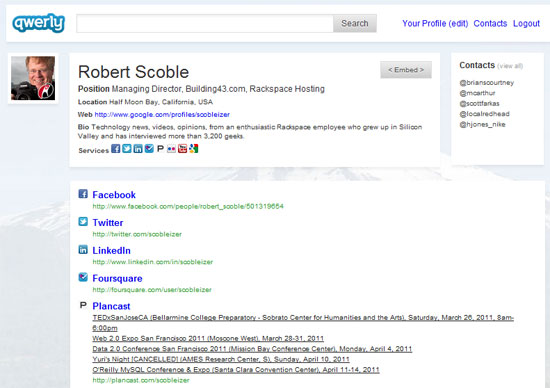
Qwerly gives you a place to put all your Twitter contacts and other social networking profiles in one place. Another one of these all-in-one apps? I hear you, but Qwerly allows you to make this a fun and convenient experience.

All you do is sign in using Twitter’s authentication and it automatically pulls in all the information for you. Qwerly saves you all the trouble of manually entering your information. In addition, it helps you connect with more users by telling you what other people are up to.

7. Twileshare
Twileshare

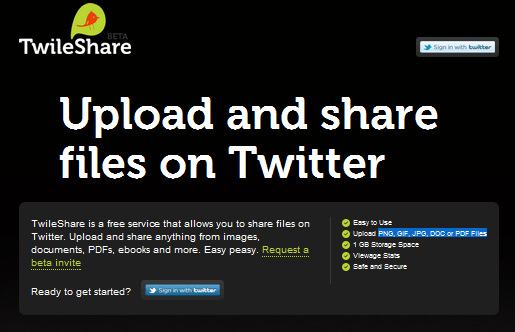
You most likely know that there are several file-sharing tools out there for Twitter. In the past few weeks, I tested a few of them, and my decision is firm that Twileshare is the best one out of the whole bunch.

You simply upload files and share them with your followers, all in one tweet. The files are safely hosted on Twileshare’s servers and you get a generous storage space of 1GB to start out with. You’re able to share a variety of file formats such as PNG, GIF, JPG, DOC and PDF files. Another neat feature on Twileshare is that you’re able to see the amount of views your files get.

8. Twoolr
Twoolr

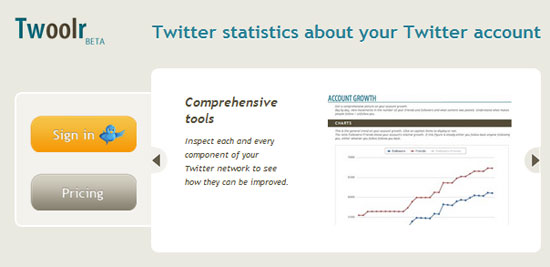
This app gives you detailed statistics about everything happening around your Twitter account. It tells you about your mentions, retweets, the words you’re using, the progression of your follower count, and more.

9. Deck.ly
Deck.ly

At a market share of just above 10% of all Twitter usage, it was only a matter of time til Tweetdeck would extend its functionality.

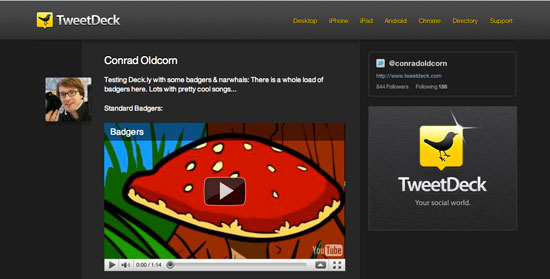
Deck.ly allows you to write updates longer than Twitter’s 140-character limit. The first part of a message over 140-characters will be tweeted alongside a link to a new platform Tweetdeck created so that your followers can view the entire message.

It comes in super handy when you need to reply or send out tweets without having to resort to cutting down your message. It even allows you to include embedded videos.

Deck.ly is sort of like Posterous on top of the Twitter platform.

10. Proxlet
Proxlet

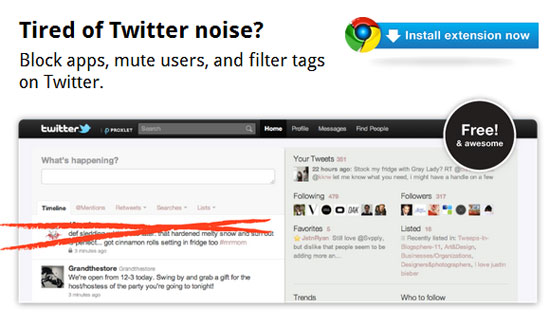
This tool allows you to mute certain tweets without unfollowing the person altogether. It also eases the pain of finally getting rid of Foursquare tweets and tweets about trending topics that you no longer want to hear about. You can do this under Settings by blocking whole hashtags, terms or apps.

Proxlet works on Tweetdeck, iPhone and other Twitter clients.

Related Content

About the Author

Leo Widrich is a Social Media enthusiast with an extra large addiction to Twitter. As Co-Founder of Buffer, he blogs at the Buffer blog every week to help their users make the most of their service. Say "Hi!" on Twitter @leowid.


Complexity of time zones explained

30 Mar

Brief history of time zones

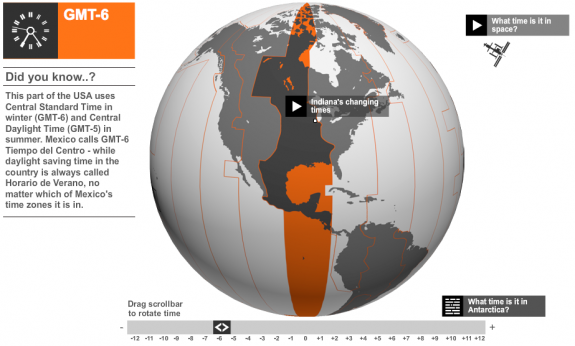
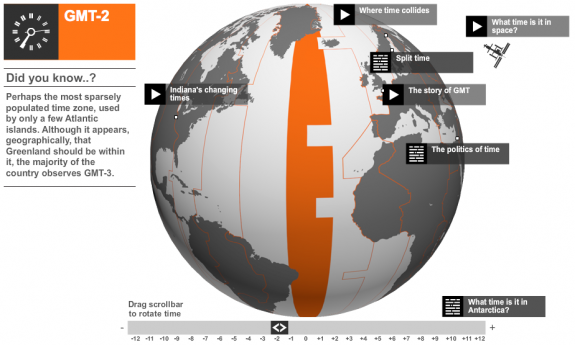
Do you understand how time zones work around the world and when exactly you need to move your watch forward or back? Me neither. BBC News provides a brief history of time zones via interactive globe.

Theoretically, the world should be divide into 24 equal time zones, in which each zone differs from the last by one hour. But as the years have passed, the world has turned into a much more complicated place. Time zones are now much more irregular and sometimes seem positively eccentric, affected as they are by political, geographical and social changes in the real world.

Rotate the globe to see where each time zone lands. Some of the zones seem relatively straight, but even in some areas like the GMT-2 time zone, there's some crookedness. There must be some small islands there or something. It's either that or the Royal Observatory is fond of puzzles. No, there aren't any other options.

[BBC News via @kelsosCorner]


40 Eye Catching Single Page Website Designs

30 Mar

One of the appealing trends which I noticed recently is to showcase your work in single page design. It’s kind of ironic to see what designers can do with single pages as modern age designers love to experiment with things and observe how people interact with their work. It can be handy a charming for designing your portfolio or to market/sell any product


The Art of the Press Release: Special RAISING HOPE Edition!

29 Mar

Continuing his penchant for delivering press releases that cut through the clutter comes the latest from the genius behind RAISING HOPE, Greg Garcia. See for yourself, after the jump.


Dear Press Member,
 
Hello, friends. It’s your pal, Greg Garcia. I’ve got a problem I was hoping you could help me out with:  Not enough people are watching my show. Sure, we’re picked up for a second season and we’re doing a decent number in the demo most weeks. But we need more people to watch.
 
My problem is I don’t have the same kind of awesome luck other shows have. I don’t have a rock-star-tiger-blooded warlock going on every network providing non-stop promotion for my show. I’m stuck with a cast of amazingly talented actors who refuse to get into any trouble at all. I’ve begged them to throw a chair through a window at a morning show, steal a necklace, smoke a questionable substance in an online video or at the very least, rent a mansion and fill it full of adult-film stars. Alas, they refuse. My young star, Lucas Neff – who should be all over TMZ – spends his weekends at the library. THE LIBRARY!!! Seriously, the kid goes to the library. See what I’m up against here?
 
Anyway, that’s why I need you to help me out. If you think the show is good, keep telling people to watch. If you think these episodes we’re making available to you today are good, tell people to watch. If you see one of my cast members out in public, slip some drugs in their pocket and call the cops.

Thanks for your help,

Greg Garcia


The History of Web Browsers (Picture)

28 Mar

From the dark ages to this day.

The History of Web Browsers (Picture)

Via: WinBeta
Source: TechKing


Quadrocopter Ball Juggling

28 Mar


Markus Waibel from robotspodcast pointed us to this amazing video showing two quadcopters juggling a small ball. The video is made by the Control of Distributed, Autonomous Systems lab of professor at the Swiss Federal Institute of Technology in Zurich (ETHZ), Raffaello D'Andrea. It is shot inside the Flying Machine Arena, a facility that provides a control environment for motion control research. The two quadcopters are based on the 'Hummingbird' quadrotor made by Ascending Technologies with new controls and custom made electronics fabricated by the institute. A vital component is a state of the art Vicon motion capture system that provides the localization data to the robots and makes extremely precise and dynamic control possible. You can learn more about the labs other projects here.
( Prof. Raffaello D’Andrea was interviewed by the robotspodcast about KIVA systems warehouse robots and another member of the team, Raymond Oung recently talked to us about an aerial modular robot called the Distributed Flight Array. )


Large file sending: Wetransfer and Sendoid

26 Mar

You must know wetransfer, which provides easy and fast server based large file sending. It's great for files smaller than 2GB if you don't mind the ads you have to look at while uploading and downloading. With wetransfer you must first upload your file to an amazon cloud server, then your recipient gets a link for the file download. The advantage is that the download is really fast and the service is free. For a fee you can get your own channel so your recipient can look at your ads instead third party ads.

There is also a new player in town when it comes to large file sending. Sendoid uses P2P technology, which means your and your recipient's computers are connected directly without a server in between. Once you select the file to be sent you get a download link instantly which you can share with your friend or colleague and they can start downloading instantly. Optionally you can also set a password for added security. Here the download speed is limited by your upload speed, so it's a bit like sending files through Skype or other chat service, however there is no size limit if you use the Sendoid desktop AIR application. Sendoid is also free and there is no pay option at present.


Religion diet may make you obese

25 Mar
NORTHWESTERN (US) — Young adults who frequently attend religious activities are 50 percent more likely to become obese by middle age as young adults with no religious involvement. By tracking participants’ weight gain over time, the study shows that normal weight younger adults with high religious involvement become obese, rather than obese adults becoming more [...]


Flawed Diamonds Could Store Quantum Data

25 Mar

DALLAS — Scientists have developed a new way to manipulate atoms inside diamond crystals so that they store information long enough to function as quantum memory, which encodes information not as the 0s and 1s crunched by conventional computers but in states that are both 0 and 1 at the same time. Physicists use such quantum data to send information securely, and hope to eventually build quantum computers capable of solving problems beyond the reach of today’s technology.

sciencenewsFor those developing this quantum memory, the perfect diamonds don’t come from Tiffany & Co. — or Harry Winston, for that matter. Impurities are the key to the technology.

“Oddly enough, perfection may not be the way to go,” said David Awschalom of the University of California, Santa Barbara. “We want to build in defects.”

One of the most common defects in diamond is nitrogen, which turns the stone yellow. When a nitrogen atom sits next to a vacant spot in the carbon crystal, the intruding element provides an extra electron that moves into the hole. Several years ago, scientists learned how to change the spin of such electrons using microwave energy and put them to work as quantum bits, or qubits.

In search of a more stable way to store quantum information, Awschalom has now figured out how to link the spin of a electron to the spin of the nearby nitrogen’s nucleus. This transfer, triggered by magnetic fields, is fast — about 100 nanoseconds, comparable to how long it takes to store information on a stick of RAM.

The technique has “a fidelity of 85 to 95 percent,” Awschalom said March 22 in Dallas at a meeting for the American Physical Society.

In contrast to some other quantum systems under development, which require temperatures close to absolute zero, this diamond memory works at room temperature. The spins inside the diamond can be both changed and measured by shining laser light into the diamond. This could make diamond an attractive material for scientists developing nanophotonic systems designed to move and store information in packets of light.

Unlike a diamond itself, this quantum memory isn’t forever. But it lasts for a very long time by quantum standards. The nuclear spin remains coherent for more than a millisecond, with the potential to improve to seconds.

“You can only do your quantum magic as long as you have coherence,” said Sebastian Loth, a physicist at IBM’s Almaden Research Center in San Jose, Calif. “If you have a lifetime of milliseconds, that lets you do millions of operations.”

In addition to stability, diamond may also overcome another hurdle that has faced quantum computing — it can be scaled up to larger sizes. In a paper published last year in Nano Letters, Awschalom developed a technique for creating customizable patterns of nitrogen atoms inside a diamond, using lasers to implant thousands of atoms in a grid.

Awschalom’s diamond quantum memory could also be useful for building large quantum networks. Currently, quantum information is transmitted by connecting, or entangling, qubits. This scheme is limited to distances of kilometers. Quantum repeaters could potentially use small chips of diamond to catch, store and retransmit this information to extend the range, enabling quantum networks to work over much longer distances.

Image: Jurvetson/Flickr

See Also:


What was a South American herbivore doing with saber teeth?

25 Mar

Some extinct animals have anatomical oddities that seem destined to be confined to the marginalia of history. Questionable characters, such as the single-fingered dinosaur and the flightless, club-winged bird , ultimately died off despite--if not because of--their idiosyncratic adaptations. [More]