RSS
 

Author Archive

Valley of the Whales

08 Aug

Paleontologist Philip Gingerich looks for sea monsters in the Egyptian desert. He assembles fossils of ancient whales that died there when it was covered by an ocean. One such whale is the Basilosaurus, which had small hind legs.

“Complete specimens like that Basilosaurus are Rosetta stones,” Gingerich told me as we drove back to his field camp. “They tell us vastly more about how the animal lived than fragmentary remains.”

Wadi Hitan—literally “valley of whales”—has proved phenomenally rich in such Rosetta stones. Over the past 27 years Gingerich and his colleagues have located the remains of more than a thousand whales here, and countless more are left to be discovered.

Researchers hope that whale fossils can help them understand how a land mammal evolved into an aquatic form that became our modern whales. Link

(Image credit: Richard Barnes/National Geographic)


The Tiger Oil Memos

07 Aug

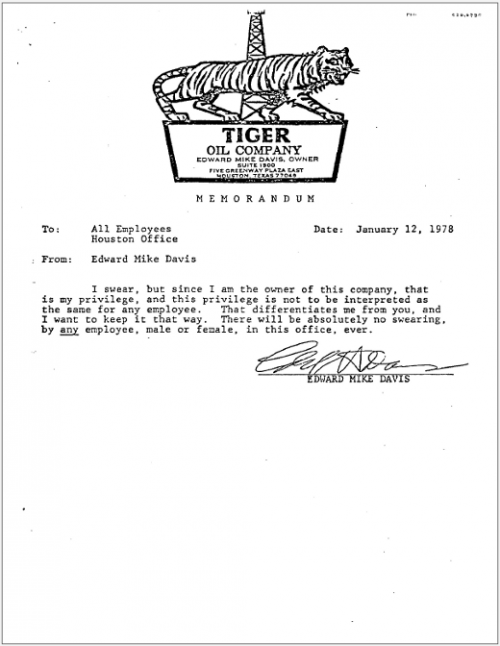
Edward Mike Davis, CEO of the defunct Tiger Oil Company, was known for his blunt and direct communications. He often sent out memos to his employees expressing his feelings in no uncertain terms. The blog Letters of Note has a selection of these missives.

Link via The Presurfer


Ritalin in the Water

06 Aug

One of my blogging policies is to not engage with trolls. I don’t answer their nasty emails or respond to their comments. Life is too short. But every once in a great while, a troll can send me somewhere interesting. And that’s what happened in the dozens of recent comments that referenced the same “white paper” by the Oxford bioethicist Julian Savulescu, “Fluoride and the Future: Population Level Cognitive Enhancement”. Here’s a sample comment:

Jonah’s friend and colleague Savulescu suggests that the government add ritalin and prozac to the public water supply. Now, sadly if I speak against that dangerous idea I am labeled a blowhard and conspiracy theorist. Fine. I’m ok with that. Guilty as charged. Please read Julian Savulescu’s white paper “Fluoride and the Future: Population Level Cognitive Enhancement”. He’s your friend Jonah.

For the record, I don’t know Professor Savulescu. So I googled this “white paper” – apparently, a “white paper” is how conspiracy theorists make an academic blog post sound really scary – and found this utilitarian proposal:

Fluoridation of the water is an example of human enhancement. Tooth decay is a part of the human condition but we now have the ability to prevent it through a safe, cheap, easy intervention – adding fluoride to the water. Many parts of the civilized world have been employing this strategy for decades with dramatic success. England is now debating whether to fully embrace this simple enhancement technology.

Fluoridation is the tip of the enhancement iceberg. Science is progressing fast to develop safe and effective cognitive enhancers, drugs which will improve our mental abilities. For years, people have used crude enhancers, usually to promote wakefulness, like nicotine, caffeine and amphetamines. A new generation of more effective enhancers is emerging modafenil, ritalin, Adderral and ampakines and the piracetam family of memory improvers. Students and professionals are using these to gain a competitive edge, just as athletes are doping in sport.

But once highly safe and effective cognitive enhancers are developed – as they almost surely will be – the question will arise whether they should be added to the water, like fluoride, or our cereals, like folate.

It seems likely that widespread population level cognitive enhancement will be irresistible. Studies based on removing lead, which reduces cognitive ability, from the water and paint, have estimated that a 3 point IQ increase would lead to: 25 percent reduction in the poverty rate, 25 percent few males in jail, 28 percent fewer high school dropouts, 20 percent fewer parentless children, 18 percent fewer welfare recipients, and 15 percent fewer out of wedlock births.

I think it’s pretty obvious that Savulescu is being deliberately provocative here. (It’s worth stating for the record that, contrary to the paranoid delusions of the trolls, there is no government conspiracy to put stimulants in the water. This is an academic philosopher blogging about a hypothetical. I can’t believe I had to spell that out.) What Savulescu is trying to explore is the hazy line between ordering a double espresso at Starbucks and snorting a bit of Ritalin. Both compounds are uppers, and both induce a similar set of cognitive effects: sharpened attention, improved learning and memory, temporary boosts in IQ scores, etc. Society has clearly benefited from the invention of caffeine (especially since the morning coffee replaced the morning beer as the 17th century drink of choice), so why shouldn’t we also put a touch of amphetamine in the water?

Well, I think there are many good reasons why this is a very bad idea. Last year, I had an article in Nature on the thirty-three different rodent strains that show dramatically enhanced learning and memory. The genetically tweaked animals can learn faster, remember events for longer and are able to solve complex mazes that confuse their ordinary littermates. At first glance, these strains seem like the rodent of the future, a case-study in the infinite possibilities of cognitive enhancement. But I think that’s a blinkered view. When you look closer at the mice, it becomes clear that many of these animal models of enhanced cognition co-exist with subtle negative side-effects. Consider a mutant strain that overexpresses adenylyl-cyclase in the forebrain: Although the mice exhibit improved recognition memory and LTP, they show decreased performance on memory extinction tasks. (In other words, they struggle to forget irrelevant information.) Other strains of “smart mice” excel at solving complex exercises, such as the Morris Water Maze, but struggle with simpler conditions. It’s as if they remember too much.

And then there’s “Doogie,” the rodent strain named after the fictional television prodigy Doogie Howser. These mice overexpress a particular subunit of the NMDA receptor, known as NR2B, which allows their receptors to stay open for twice as long as normal. The end result is that it’s easier for disparate events to get linked together in the brain. The only downside is that Doogie mice also seem to suffer from increased sensitivity to chronic pain. Their intelligence literally hurts.

And these tradeoffs don’t just exist in mice. Martha Farah, a neuroscientist and neuroethicist at Penn, is currently looking at the tradeoff between enhanced attention – she gives subjects a mild amphetamine – and performance on creative tasks. As she told me for the Nature article, “The brain appears to have made a compromise in that having a more accurate memory interferes with the ability to generalize…You need a little noise in order to be able to think abstractly, to get beyond the concrete and literal.”

That’s also the lesson of one of the few case studies of an individual with profoundly enhanced memory. In the early 1920s, the Russian neurologist A.R. Luria began studying the mnemonic skills of a newspaper reporter named Sherashevsky, who had been referred to the doctor by his editor. Luria quickly realized that Sherashevsky was a freak of recollection, a man with such a perfect memory that he often struggled to forget irrelevant details. After a single read of Dante’s Divine Comedy, he was able to recite the complete poem by heart. When given a random string of numbers hundreds of digits long, Sherashevsky easily remembered all the numbers, even weeks later. While this flawless memory occasionally helped Sherashevsky at work – he never needed to take notes – Luria also documented the profound disadvantages of such an infinite memory. Sherashevsky, for instance, was almost entirely unable to grasp metaphors, since his mind was so fixated on particulars. “He [Sherashevsky] tried to read poetry, but the obstacles to his understanding were overwhelming,” Luria wrote. “Each expression gave rise to a remembered image; this, in turn, would conflict with another image that had been evoked.”

For Luria, the struggles of Sherashevsky were a powerful reminder that the ability to forget is just as important as the ability to remember. As Jorge Luis Borges wrote in Funes the Memorious, a short story about a man with a perfect memory that was likely inspired by Luria’s case-study, “To think is to forget a difference, to generalize, to abstract. In the overly replete world of Funes, there were nothing but details.”

These unintended consequences are why I think it’s way too soon to start thinking about cognitive enhancement for people without cognitive deficits. (It’s also why I don’t dabble in modafinil or adderral – I’ll stick with my cappuccinos, thank you very much.) After all, if we can’t even improve the intelligence of mice without causing worrisome side-effects, then what hope is there for the endlessly complex human cortex, full of feedback loops and interacting pathways? The brain is a precisely equilibrated machine, constructed over tens of millions of years by natural selection. Too many of our “improvements” come with a steep cost.


Vintage-style ads for Facebook, Skype and YouTube

06 Aug
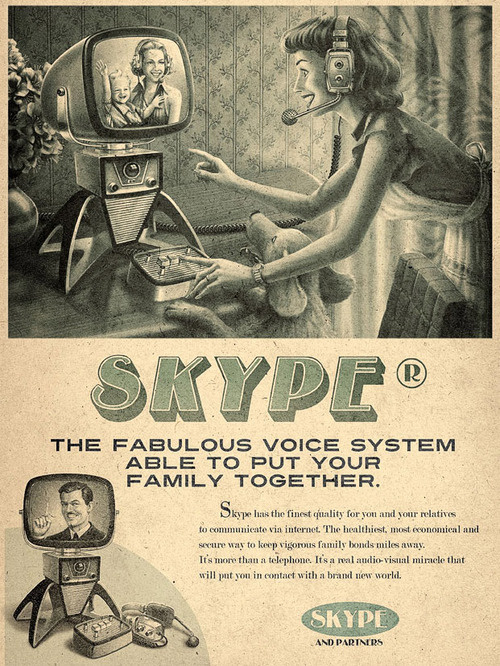
500x_0805_ads_skype.jpg Brazil's Moma ad agency created a set of ads for newfangled tech companies in a mid-century style. [Ads of the World via Gawker]


Triceratops controversy shakes paleontology to its bones [Mad Paleontology]

06 Aug
Paleontologists have discovered a shocking fact about the relationship between the celebrated Triceratops dinosaur (left) and its less-glamorous, holey-headed counterpart, Torosaurus (right). Turns out they're not evolutionary cousins. In fact, Triceratops is just a younger version of Torosaurus. More »


Cool Photos and Artworks for Your Inspiration #21

05 Aug

This post is part of our weekly series: showing some interesting Photos and Artworks around the Web so you can get inspiration for your design. If you want to share your great Photos or Artworks with our readers, just send them over via email with image source link using “Weekly Photos and Artworks Inspiration” in the subject. Enjoy the post.

If you see a photo or artwork that is yours and you want credit or it to be taken off, just let us know. We don’t take credit for any of these, this post is just for collecting cool photos and artworks for design inspiration.


There Are 129,864,880 Different Books in the World

05 Aug

Google, which is engaging in extensive book digitization projects, recently set out to determine the number of distinct print books currently in existence:

After some intensive analysis, we’ve come up with a number. Standing on the shoulders of giants—libraries and cataloging organizations—and based on our computational resources and experience of organizing millions of books through our Books Library Project and Books Partner Program since 2004, we’ve determined that number.

As of today, we estimate that there are 129,864,880 different books in the world. That’s a lot of knowledge captured in the written word! This calculation used an algorithm that combines books information from multiple sources including libraries, WorldCat, national union catalogs and commercial providers. And the actual number of books is always increasing.

Link via Cool-O-Rama | Photo by Flickr user Nrbelex used under Creative Commons license


How Jimmy Carter Saved Beer

05 Aug

I am not a drinker, but this, per E.D. Kain, seems like an unappreciated accomplishment for the 39th president:

If you’re a fan of craft beer and microbreweries as opposed to say Bud Light or Coors, you should say a little thank you to Jimmy Carter. Carter could very well be the hero of International Beer Day.

To make a long story short, prohibition led to the dismantling of many small breweries around the nation. When prohibition was lifted, government tightly regulated the market, and small scale producers were essentially shut out of the beer market altogether. Regulations imposed at the time greatly benefited the large beer makers. In 1979, Carter deregulated the beer industry, opening  back up to craft brewers. As the chart below illustrates, this had a really amazing effect on the beer industry:


US_Brewery_Count_Biodesic-thumb-400x339

Possibly this was all a plot to jack up peanut sales. But it worked.

It's worth noting that Carter got no political credit for this move, and that the benefits didn't appear until long after he departed. Some policy successes -- like a successful war or peace treaty -- yield immediate political dividends. But others produce little change until many years later, by which time everybody has forgotten your policy had anything to do with it.



We may have been looking at the wrong DNA for the secrets of longevity [Mad Genomics]

05 Aug
In each cell nucleus, hidden in our massive strands of human DNA, lies the secret of longevity. Or so we thought. But tiny rings of mitochondrial DNA, responsible for coding just 13 proteins, might actually hold the key. More »


We Are All Talk Radio Hosts

05 Aug

Let me tell you a story about strawberry jam. In 1991, the psychologists Timothy Wilson and Jonathan Schooler decided to replicate a Consumer Reports taste test that carefully ranked forty-five different jams. Their scientific question was simple: Would random undergrads have the same preferences as the experts at the magazine? Did everybody agree on which strawberry jams tasted the best?

Wilson and Schooler took the 1st, 11th, 24th, 32nd, and 44th best tasting jams (at least according to Consumer Reports) and asked the students for their opinion. In general, the preferences of the college students closely mirrored the preferences of the experts. Both groups thought Knott’s Berry Farm and Alpha Beta were the two best-tasting brands, with Featherweight a close third. They also agreed that the worst strawberry jams were Acme and Sorrel Ridge. When Wilson and Schooler compared the preferences of the students and the Consumer Reports panelists, he found that they had a statistical correlation of .55. When it comes to judging jam, we are all natural experts. We can automatically pick out the products that provide us with the most pleasure.

But that was only the first part of the experiment. The psychologists then repeated the jam taste test with a separate group of college students, only this time they asked them to explain why they preferred one brand over another. As the undergrads tasted the jams, the students filled out written questionnaires, which forced them to analyze their first impressions, to consciously explain their impulsive preferences. All this extra analysis seriously warped their jam judgment. The students now preferred Sorrel-Ridge—the worst tasting jam according to Consumer Reports—to Knott’s Berry farm, which was the experts’ favorite jam. The correlation plummeted to .11, which means that there was virtually no relationship between the rankings of the experts and the opinions of these introspective students.

What happened? Wilson and Schooler argue that “thinking too much” about strawberry jam causes us to focus on all sorts of variables that don’t actually matter. Instead of just listening to our instinctive preferences, we start searching for reasons to prefer one jam over another.  For example, we might notice that the Acme brand is particularly easy to spread, and so we’ll give it a high ranking, even if we don’t actually care about the spreadability of jam. Or we might notice that Knott’s Berry Farm has a chunky texture, which seems like a bad thing, even if we’ve never really thought about the texture of jam before. But having a chunky texture sounds like a plausible reason to dislike a jam, and so we revise our preferences to reflect this convoluted logic.

And it’s not just jam: Wilson and others have since demonstrated that the same effect can interfere with our choice of posters, jelly beans, cars, IKEA couches and apartments. We assume that more rational analysis leads to better choices but, in many instances, that assumption is exactly backwards.

These studies represent an important reevaluation of the human reasoning process. Instead of celebrating our analytical powers, these experiments document our foibles and flaws. They explore why human reason can so often lead us to believe blatantly irrational things, or why it’s reliably associated with mistakes like cognitive dissonance or confirmation bias. And this leads me to a wonderful new paper by Hugo Mercier and Dan Sperber (I found it via this insightful talk by Jonathan Haidt) that summons a wide range of evidence – such as the strawberry jam study above – to argue that human reason has nothing to do with finding the truth, or locating the best alternative. Instead, it’s all about argumentation. Here’s their abstract:

Reasoning is generally seen as a mean to improve knowledge and make better decisions. Much evidence, however, shows that reasoning often leads to epistemic distortions and poor decisions. This suggests rethinking the function of reasoning. Our hypothesis is that the function of reasoning is argumentative. It is to devise and evaluate arguments intended to persuade. Reasoning so conceived is adaptive given human exceptional dependence on communication and vulnerability to misinformation. A wide range of evidence in the psychology or reasoning and decision making can be reinterpreted and better explained in the light of this hypothesis. Poor performance in standard reasoning tasks is explained by the lack of argumentative context. When the same problems are placed in a proper argumentative setting, people turn out to be skilled arguers. Skilled arguers, however, are not after the truth but after arguments supporting their views. This explains the notorious confirmation bias. This bias is apparent not only when people are actually arguing but also when they are reasoning proactively with the perspective of having to defend their opinions. Reasoning so motivated can distort evaluations and attitudes and allow the persistence of erroneous beliefs. Proactively used reasoning also favors decisions that are easy to justify but not necessarily better. In all of these instances traditionally described as failures or flaws, reasoning does exactly what can be expected of an argumentative device: look for arguments that support a given conclusion, and favor conclusions in support of which arguments can be found.

Needless to say, this new theory paints a rather bleak portrait of human nature. Ever since the Ancient Greeks, we’ve defined ourselves in terms of our rationality, the Promethean gift of reason. It’s what allows us to make sense of the world and uncover all sorts of hidden truths. It’s what separates us from other Old World primates. But Mercier and Sperber argue that reason has nothing to do with reality. Instead, it’s rooted in communication, in the act of trying to persuade other people that what we believe is true. And that’s why thinking more about strawberry jam doesn’t lead to better jam decisions. What it does do, however, is provide up with more ammunition to convince someone else that the chunky texture of Knott’s Berry Farm is really delicious, even if it’s not.

The larger moral is that our metaphors for reasoning are all wrong. We like to believe that the gift of human reason lets us think like scientists, so that our conscious thoughts lead us closer to the truth. But here’s the paradox: all that reasoning and confabulation can often lead us astray, so that we end up knowing less about what jams/cars/jelly beans we actually prefer. So here’s my new metaphor for human reason: our rational faculty isn’t a scientist – it’s a talk radio host. That voice in your head spewing out eloquent reasons to do this or do that doesn’t actually know what’s going on, and it’s not particularly adept at getting you nearer to reality. Instead, it only cares about finding reasons that sound good, even if the reasons are actually irrelevant or false. (Put another way, we’re not being rational – we’re rationalizing.) While it’s easy to read these crazy blog comments and feel smug, secure in our own sober thinking, it’s also worth remembering that we’re all vulnerable to sloppy reasoning and the confirmation bias. Everybody has a blowhard inside them. And this is why it’s so important to be aware of our cognitive limitations. Unless we take our innate flaws into account, the blessing of human reason can easily become a curse.

Image: The Image Spot